Malaria-Free Big Five Reserves in Africa: The Complete List
Where to see the Big Five without malaria. South Africa's malaria-free reserves, Namibia's low-risk parks, and the honest truth about the rest of Africa.
If you want to see the Big Five, lion, leopard, elephant, buffalo and rhino, without taking antimalarial tablets, your options are genuinely short, and almost all of them are in South Africa. It is the only country in Africa that reliably offers a complete malaria-free Big Five safari across multiple reserves.
Elsewhere on the continent you’ll find low-risk areas where precautions are still advised, or malaria-free parks that simply don’t have all five animals.
That honesty matters, because plenty of “malaria-free Africa” lists blur the line. This guide separates the genuinely malaria-free Big Five reserves from the merely low-risk ones, so you can plan with confidence, especially if you’re travelling with young children, are pregnant, or would rather skip the medication.
First, what “malaria-free” actually means
The World Health Organization treats an area as malaria-free when there’s no continuing local mosquito-borne transmission and any risk comes only from cases introduced from elsewhere. In practice, a handful of South African reserves meet that bar year-round.
Two cautions before the list:
- “Low-risk” is not “no-risk.” Places like Namibia’s Etosha or Kenya’s highland conservancies carry a small malaria risk that rises in the rainy season; many doctors still recommend prophylaxis there.
- Malaria-free doesn’t always mean Big Five. Some malaria-free parks (the Kgalagadi, the Namib) are spectacular but don’t hold all five animals.
This is general information, not medical advice. Malaria risk changes by season and region, so always confirm current guidance with a travel clinic or your doctor before you travel and pack insect repellent even for a malaria-free reserve.
At a glance
| Region | Country | Malaria status | Big Five? | Best for |
|---|---|---|---|---|
| Eastern Cape | South Africa | Malaria-free | Yes | Families, Garden Route combos, first-timers |
| Madikwe | South Africa | Malaria-free | Yes | Reliable game viewing, wild dog, families |
| Pilanesberg | South Africa | Malaria-free | Yes | Easy access from Johannesburg, self-drive |
| Waterberg | South Africa | Malaria-free | Yes | Walking & horse safaris, exclusive-use lodges |
| Karoo (Sanbona, Samara) | South Africa | Malaria-free | Yes | Closest to Cape Town, dramatic scenery |
| Kalahari (Tswalu) | South Africa | Malaria-free | Most of the five | Ultra-exclusive, rare desert species |
| Etosha | Namibia | Low-risk (dry season) | Four (no buffalo) | Iconic salt-pan waterholes, self-drive |
| Laikipia conservancies | Kenya | Low-risk (altitude) | Yes | Rhino conservation, walking, East African scenery |
South Africa: the malaria-free Big Five heartland
1. The Eastern Cape
The malaria-free safari capital. A cluster of private reserves, Shamwari, Kwandwe, Amakhala, Kariega and Gondwana, plus Addo Elephant National Park all sit in a malaria-free zone an easy drive from Gqeberha (Port Elizabeth), making the region simple to pair with the Garden Route and Cape Town.
Wildlife here was largely reintroduced, but the Big Five viewing is excellent, and many lodges are built specifically for families with children. Addo even offers the “Big Seven,” adding southern right whales and great white sharks along its coastal section. See our Eastern Cape reserves.
2. Madikwe
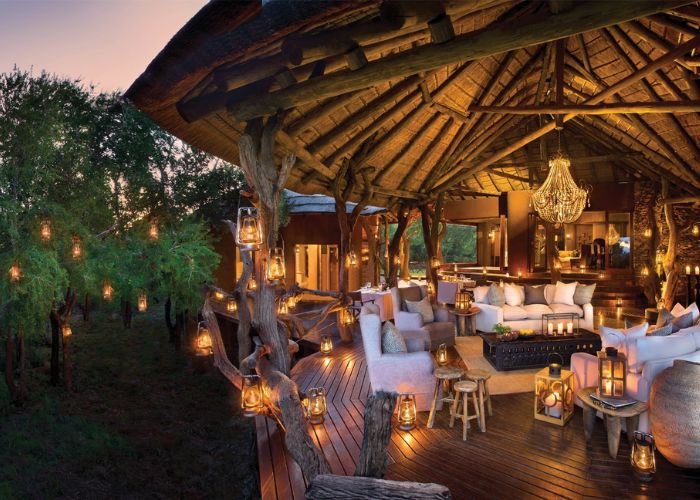
On the Botswana border, Madikwe is one of South Africa’s largest reserves and offers the most consistent Big Five viewing of all the malaria-free options, plus reliable sightings of wild dog and cheetah.
It allows no day visitors, so sightings stay uncrowded, and several lodges cater specifically to families. Reach it on a roughly four-to-five-hour drive or a one-hour flight from Johannesburg. See our Madikwe lodges.
3. Pilanesberg
Set in an ancient volcanic crater under three hours from Johannesburg, Pilanesberg holds all of the Big Five (the big cats take a little luck) and over 300 bird species. Its accessibility and proximity to Sun City make it a great short or family trip, with the option to self-drive or join guided game drives. See our Pilanesberg lodges.
4. The Waterberg
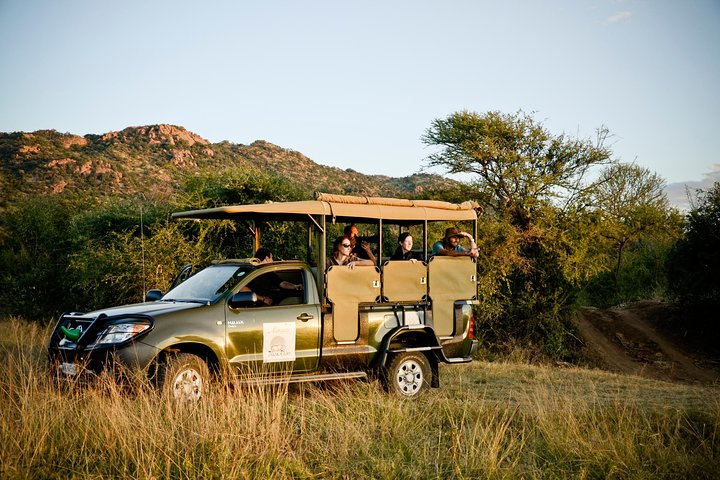
A malaria-free UNESCO biosphere in Limpopo, under three hours from Johannesburg. Reserves like Welgevonden and Marakele (home to Marataba) deliver Big Five game viewing across dramatic mountain scenery, and the region is known for walking safaris and horseback riding. Intimate exclusive-use lodges make it a strong choice for multigenerational groups.
See our Waterberg lodges.
5. The Karoo
South Africa’s vast semi-desert, and the closest malaria-free Big Five safari to Cape Town. Sanbona Wildlife Reserve about a three-hour drive from the city is home to free-roaming white lions, the Big Five and ancient San rock art, while Samara Karoo tells one of the country’s great rewilding stories.
Big skies, mountain backdrops and a real sense of remoteness. See our Karoo camps, including Dwyka Tented Lodge in the malaria-free Sanbona reserve.
6. The Kalahari (Tswalu)
For travellers who want the rarest and most exclusive end of the malaria-free spectrum, Tswalu is South Africa’s largest private reserve and hosts only around 30 guests at a time.
It’s celebrated for black-maned Kalahari lion, desert-adapted black rhino and seldom-seen species like pangolin and aardvark, with your own vehicle, guide and tracker. (As a desert reserve its species mix differs from the classic bushveld parks, so confirm specific Big Five sightings when you book.) See our Kalahari camps.
Namibia: low-risk, with caveats
Much of Namibia — the Namib Desert, the coast, the central and southern regions — is genuinely malaria-free thanks to its aridity, but those areas are about desert landscapes rather than the Big Five.
Etosha National Park, Namibia’s flagship, is the country’s premier wildlife destination, with extraordinary waterhole sightings around its vast salt pan. It sits in a low-risk zone; risk is minimal in the dry winter months (roughly May–October) but not zero, so many travellers still take precautions. It’s also not a complete Big Five park: Etosha has elephant, lion, leopard and rhino, but no buffalo.
For self-drivers and photographers it’s still one of Africa’s most rewarding parks, and pairs beautifully with the malaria-free desert. See our Namibia lodges.
Kenya: low-risk highland conservancies
In the Laikipia highlands, the altitude keeps malaria risk low (though, again, not zero, precautions are usually advised). Private conservancies here, such as Ol Pejeta, Lewa, Solio and Borana, are East Africa’s rhino strongholds and offer genuine Big Five viewing alongside walking safaris and conservation experiences; a good option if you want a lower-risk East African safari rather than a South African one.
Malaria-free, but not Big Five
Worth knowing so you’re not caught out:
- Kgalagadi Transfrontier Park (South Africa/Botswana): Malaria-free and Botswana’s only malaria-free option, famous for black-maned lions, cheetah and raptors, but not a Big Five park.
- Namib-Naukluft & Sossusvlei (Namibia): Malaria-free desert wilderness and towering dunes, but a landscape-and-desert-wildlife destination rather than a Big Five one.
Which should you choose?
- Travelling with young kids? The Eastern Cape and Madikwe are purpose-built for families and entirely malaria-free.
- Short on time or based near Johannesburg? Pilanesberg or the Waterberg.
- Combining with Cape Town? The Karoo (Sanbona) or the Eastern Cape’s Garden Route reserves.
- Want exclusive and remote? Tswalu in the Kalahari.
- Set on East Africa? Kenya’s Laikipia conservancies, with precautions.
For South Africa specifically, see do you need malaria tablets for a safari? and the best time to visit South Africa. When you’re ready, browse our malaria-free safari camps and filter by region.
Frequently asked questions
Where can you go on a malaria-free Big Five safari in Africa?
Almost all genuinely malaria-free Big Five reserves are in South Africa, the Eastern Cape, Madikwe, Pilanesberg, the Waterberg and the Karoo (Sanbona, Samara). South Africa is the only African country that reliably offers a complete malaria-free Big Five experience.
Is Kruger National Park malaria-free?
No. The Greater Kruger lies in a low-risk malaria zone, with risk highest in the rainy summer months, and antimalarial medication is generally recommended. For a malaria-free trip, choose one of South Africa’s malaria-free reserves instead.
Is Etosha in Namibia malaria-free?
Etosha is low-risk rather than strictly malaria-free, the risk is minimal in the dry winter but not zero, so many travellers still take precautions. It also has four of the Big Five, with no buffalo.
Can you see the Big Five without malaria tablets?
Yes, in South Africa’s malaria-free reserves you can see all five animals with no need for prophylaxis. Always confirm current advice with a doctor, as guidance can change.
Are malaria-free reserves good for families?
They’re ideal. Reserves like Madikwe and those in the Eastern Cape offer family suites, junior-ranger programmes and Big Five viewing without the need to medicate young children.
1 thought on “Malaria-Free Big Five Reserves in Africa: The Complete List”
Comments are closed.