Glamping in Africa: The Complete Guide to Luxury Camping on Safari (2026)
Somewhere between a sleeping bag on hard ground and a marble-clad hotel suite lies the single best way to experience Africa: the luxury tented camp. You fall asleep to lions calling across the river. You wake to coffee delivered through canvas flaps at dawn.
And at no point do you sacrifice a proper bed, hot water, or a glass of cold Chenin Blanc at sunset.
This is glamping in Africa and it isn't a trend borrowed from festival culture. Safari operators here effectively invented the concept a century before the word existed.
This guide covers where to go, what it costs, when to travel, and how to choose between the hundreds of tented camps, treehouses, and dome suites scattered from the Cape to the Serengeti.
What Does Glamping in Africa Actually Mean?
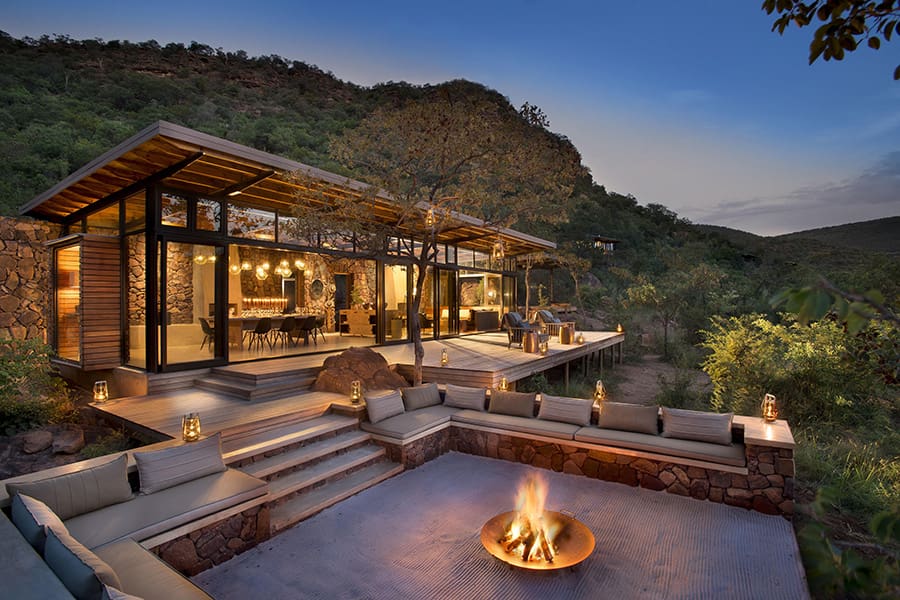
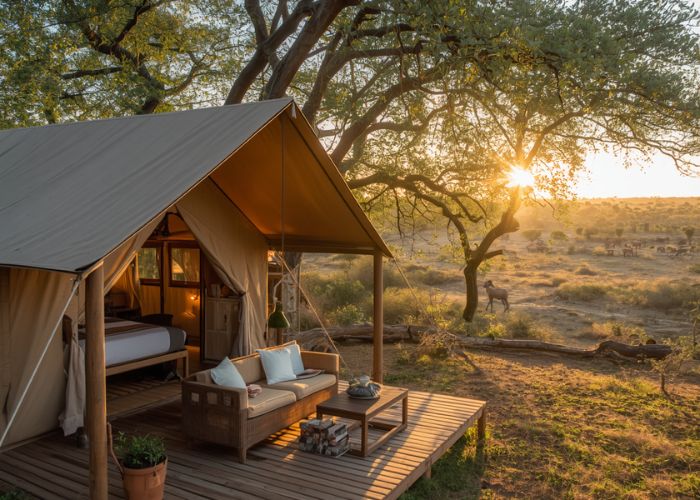
Glamping — glamorous camping — in the African context usually means a luxury tented camp: a permanent or semi-permanent structure with canvas walls, a solid floor, a real bed, an en-suite bathroom, and often a private deck or plunge pool.
The canvas is the point. It keeps you connected to the sounds and smells of the bush in a way no brick-and-mortar lodge can, while everything inside the tent would pass muster in a five-star hotel.
The category has stretched well beyond tents, though.
Across the continent you'll now find glass-fronted eco-domes in the Cape winelands, treehouses overlooking waterholes, star beds on raised platforms in the Kalahari, and even a train permanently parked on a bridge above the Sabie River — the famous Kruger Shalati, where suites occupy restored 1950s carriages suspended over crocodile-filled water.
What unites them is a simple formula: immersive setting, small scale, high comfort. Most African glamping properties have fewer than 20 units. Many have fewer than 10.
The Best Countries for Glamping in Africa
South Africa: The Most Variety, the Easiest Logistics
South Africa is the natural starting point, and not only because it's the easiest African country to travel independently.
The variety is unmatched. In the Sabi Sand Nature Reserve, adjoining Kruger National Park, you'll find some of the most celebrated tented suites on the continent — Singita Ebony's open-fronted rooms face the Sand River, while its sister lodge Singita Sweni hides riverside suites in thick riverine forest.
Both consistently rank among the best safari lodges in the world.
Beyond the classic safari circuit, the Klein Karoo offers tented lodges like Dwyka, set in a horseshoe bend of a dry riverbed in Sanbona Wildlife Reserve, where the drawcard is silence, stargazing, and free-roaming lion and cheetah in a malaria-free reserve just three hours from Cape Town.
Malaria-free glamping is a genuine South African specialty and a major consideration for families with young children.
Budget range: roughly $250 per person per night at comfortable tented camps inside Kruger's public and concession areas, climbing to $2,000+ at the Sabi Sand's flagship lodges.
Botswana: The Purist's Choice
Botswana built its tourism model on low-volume, high-value camps, and the Okavango Delta is arguably the spiritual home of the luxury tented safari. Camps here are small, remote, reached by light aircraft, and often seasonal — some are packed up entirely when the flood waters shift.
Expect superb guiding, water-based activities like mokoro (dugout canoe) excursions, and prices to match: $1,000–$3,000 per person per night in high season is normal.
Tanzania & Kenya: The Great Migration Under Canvas
East Africa perfected the mobile tented camp; camps that physically relocate two or three times a year to follow the wildebeest migration between the Serengeti and the Masai Mara.
Staying in one means canvas walls, bucket showers heated on request, and front-row seats to the greatest wildlife spectacle on Earth.
If a river crossing at dawn is on your bucket list, a migration-following camp is the way to see it.
Namibia: Glamping for Landscape Lovers
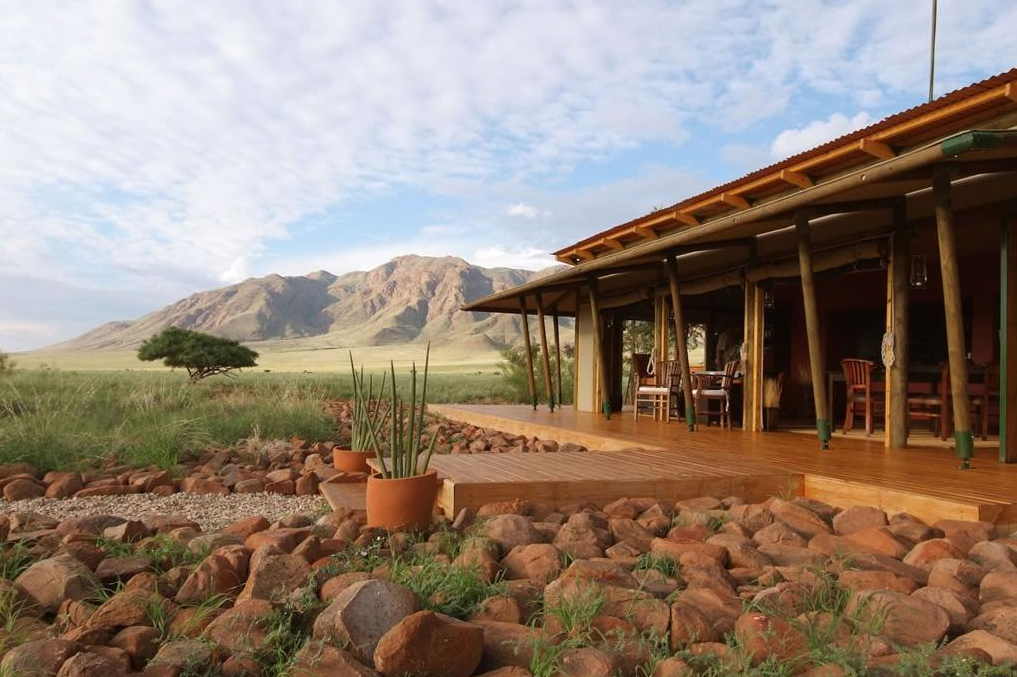
Namibia trades big-game density for scenery that looks borrowed from another planet. Tented and dome-style camps near Sossusvlei put you within reach of the world's tallest dunes at sunrise, while remote camps in Damaraland track desert-adapted elephant and rhino.
Namibia also offers some of the darkest certified night skies on Earth — several camps are built specifically around stargazing, with retractable roofs or outdoor star beds.
How Much Does Glamping in Africa Cost?
Prices vary more than almost any other travel category, because “glamping” spans everything from a self-catered eco-dome to an all-inclusive private-guide experience. As a working framework for 2026:
Entry level ($150–$350 per person per night): Tented camps in South African national parks, eco-domes and treehouses in the Cape and Garden Route, self-drive-friendly camps in Namibia. Often room-only or B&B.
Mid-range ($350–$800): Private reserve tented lodges in South Africa's Waterberg, Madikwe, and Eastern Cape; quality migration camps in Tanzania's less-visited southern parks. Usually fully inclusive of meals and game drives.
Top end ($800–$3,000+): Sabi Sand flagships, Okavango Delta water camps, private-conservancy camps in the Masai Mara. All-inclusive down to the champagne, with guide quality and wildlife access that genuinely justify the number.
A useful rule: in Southern and East Africa, the nightly rate usually includes far more than a hotel rate would — game drives, all meals, often drinks and laundry. Compare like with like before ruling anything out.
When to Go: A Season-by-Season Cheat Sheet
The classic advice — dry season for game viewing — holds, but the “best” time depends on what you're optimising for.
May to October (Southern Africa's dry winter) delivers the easiest wildlife sightings: vegetation thins, animals concentrate at water, and days are mild and cloudless. This is peak season for Kruger, the Sabi Sand, Botswana, and Zambia, and camps price accordingly.
July to October is river-crossing season for the Great Migration in the northern Serengeti and Masai Mara — book mobile camps 9–12 months ahead.
November to March (green season) is the insider's window in Southern Africa. Rates drop meaningfully, landscapes turn emerald, migratory birds arrive, and most antelope species drop their young.
Photographers often prefer it. The trade-off is thicker bush and afternoon thunderstorms — which, from under canvas, are an experience in themselves.
Cape Town and the winelands run on the opposite rhythm: December to March is warm, dry, and ideal for the dome-and-treehouse style of glamping that has flourished within a few hours of the city.
How to Choose the Right Camp: Five Questions That Matter
1. Is it inside a Big Five reserve, or is wildlife a backdrop? Some spectacular glamping properties sit on farmland or in mountain reserves with no dangerous game — perfect for hiking, stargazing, and unwinding, wrong for someone expecting lions at breakfast. Check what the property itself says about resident wildlife, not just the photos.
2. Is the area malaria-free? South Africa's Eastern Cape, Madikwe, Pilanesberg, the Waterberg, and the entire Western Cape are malaria-free. Kruger, Botswana, Zambia, and East Africa are not. For families and pregnant travellers this single filter can decide the trip.
3. What's actually included? An $800 all-inclusive camp with two daily game drives, all meals, and drinks can cost less in practice than a $400 room-only lodge once activities are added.
4. How many units does the camp have? Under 12 tents generally means flexible game drives, communal dinners if you want them, and guides who learn your interests. Over 30 starts to feel like a hotel in canvas.
5. Canvas, dome, treehouse, or star bed? Be honest about your comfort threshold. True canvas transmits every night sound — thrilling for most, sleepless for some. Domes and treehouses offer the setting with more insulation between you and the hyenas.
Is Glamping in Africa Safe?
Statistically, yes — and the safety record of established tented camps is excellent. Camps in Big Five areas operate on well-drilled protocols: guests are escorted to and from tents after dark, tents are zipped or latched (animals almost never attempt to enter a closed tent), and guides brief you on arrival.
The rules are simple and non-negotiable — don't walk unescorted at night, don't keep food in your tent, don't run.
Follow them and a tented camp is no more dangerous than a lodge with walls. Millions of guest-nights every year bear this out.
Malaria, where present, is the more meaningful risk to manage: consult a travel clinic about prophylactics 4–6 weeks before departure, or simply choose one of Southern Africa's many malaria-free reserves.
Frequently Asked Questions
What is the difference between glamping and a safari lodge?
A safari lodge is typically a solid structure of brick, stone, or timber; glamping properties use canvas, domes, or other lightweight structures that keep you closer to the environment.
In practice the service level is often identical — many tented camps outclass lodges on food, guiding, and price.
Do glamping tents in Africa have electricity and Wi-Fi?
Most permanent tented camps have 24-hour power (increasingly solar), charging points, and Wi-Fi in tents or common areas.
Mobile migration camps and remote wilderness camps may limit charging to certain hours and keep Wi-Fi to the main tent — usually advertised as a feature, not a flaw.
Is glamping in Africa suitable for children?
Yes, with two caveats: many high-end camps set minimum ages (often 6, sometimes 12) for safety on game drives, and malaria zones are unsuitable for very young children.
South Africa's malaria-free family-friendly reserves — Madikwe, the Eastern Cape, the Waterberg — exist precisely for this market.
How far in advance should I book?
For flagship camps and migration season, 9–12 months. For South African tented lodges outside school holidays, 3–6 months is usually comfortable. Green-season travel can often be booked within weeks.
Can I self-drive to glamping sites in Africa?
In South Africa and Namibia, absolutely — both have excellent roads and a strong self-drive culture. Botswana's Delta camps and most East African migration camps are fly-in only.