

About This Property
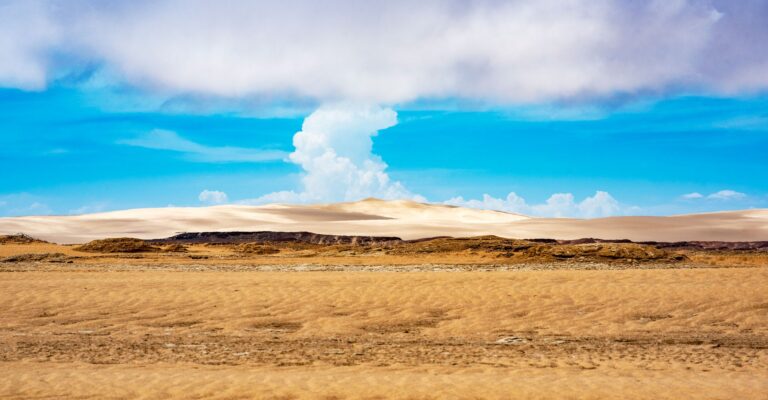
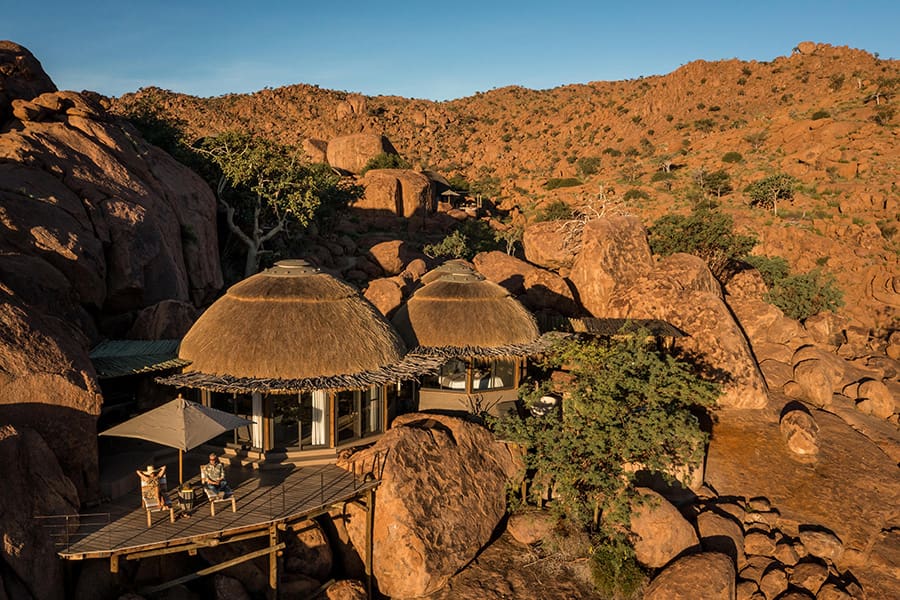
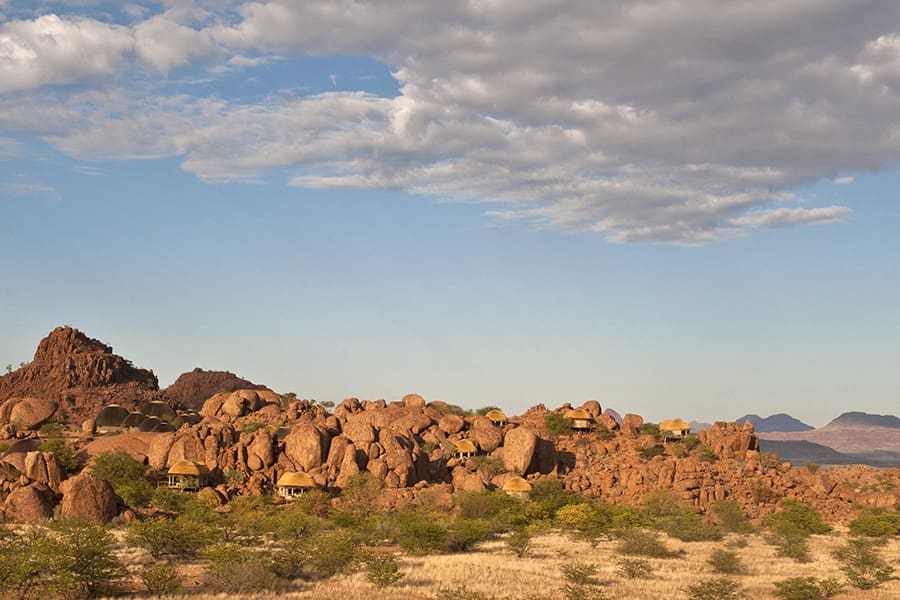
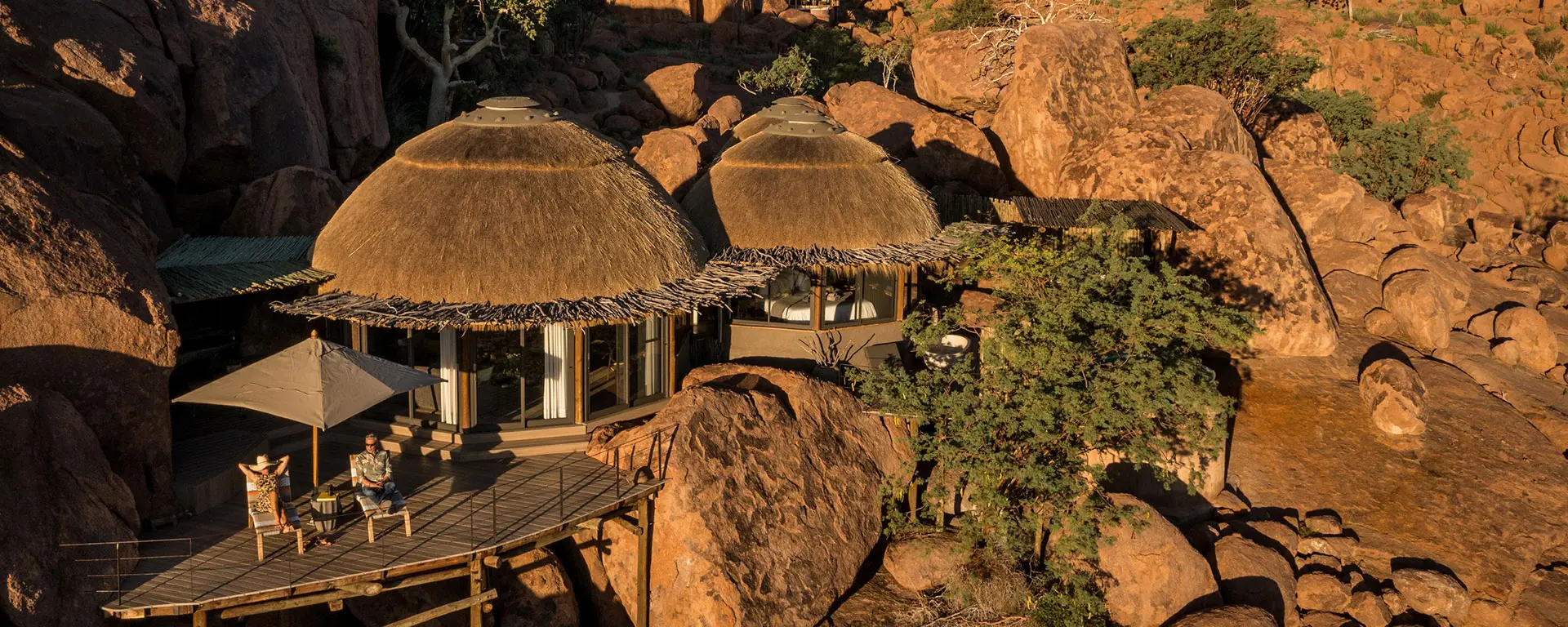
Mowani Mountain Camp sits high among massive red granite boulders in the heart of Namibia’s Damaraland, in the Uibasen-Twyfelfontein Community Conservancy. The thatch-and-canvas rooms are tucked into the rocks so the camp almost disappears into the landscape — a quiet vantage over gravel plains and distant mountains.
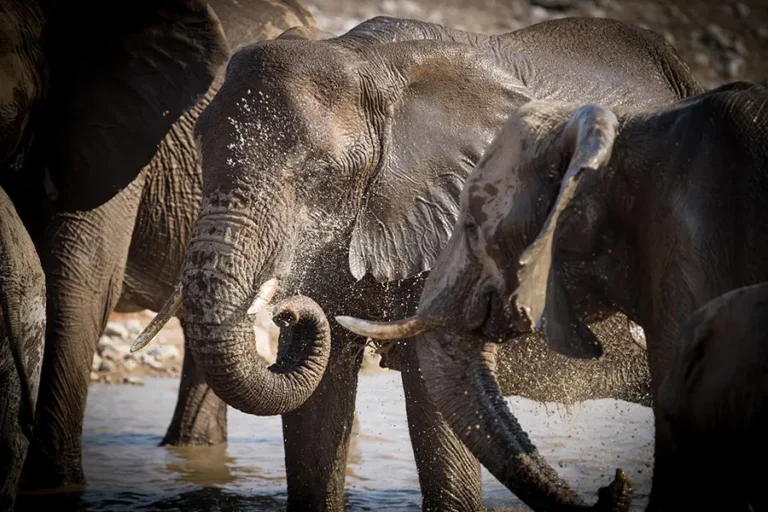
This is a vast, unspoilt wilderness, and there is more wildlife here than the rocky terrain first suggests. Guided drives head out in search of desert-adapted elephants in the dry riverbeds, and the camp has expanded its waterhole so a local herd of about 18 elephants can drink when they pass through.
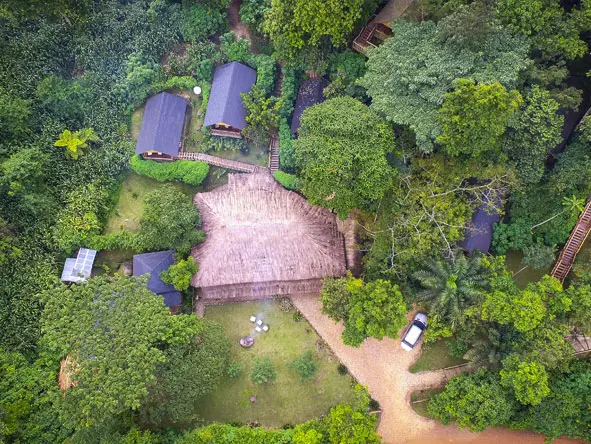
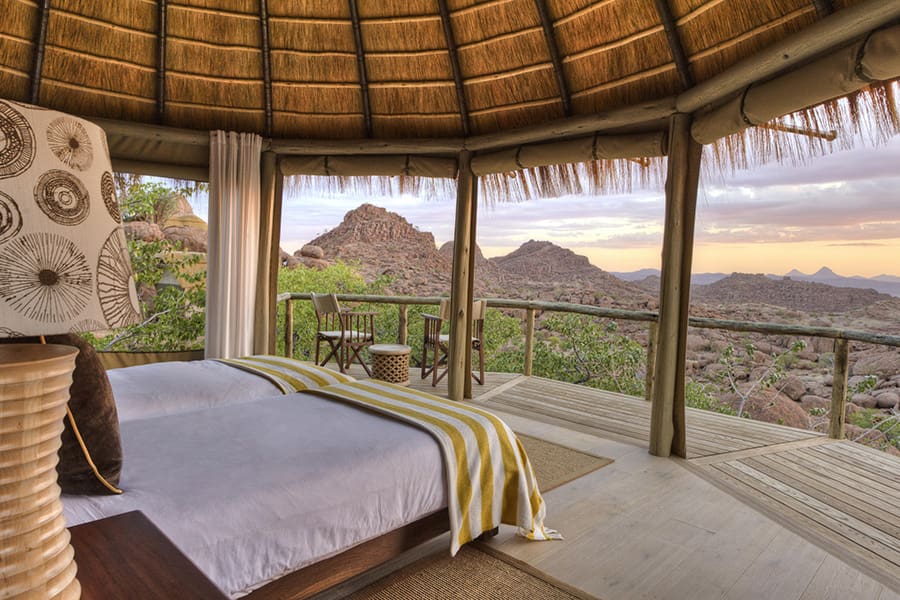
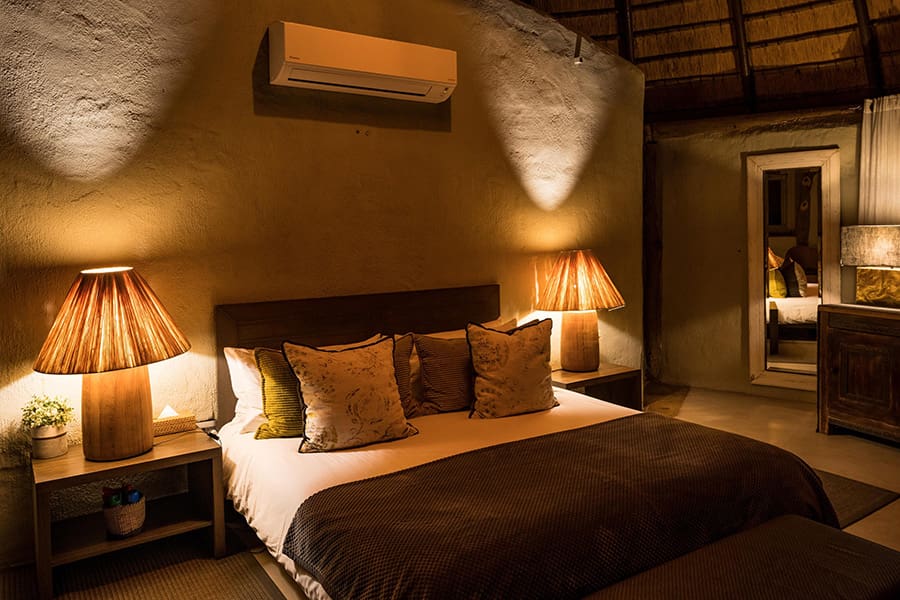
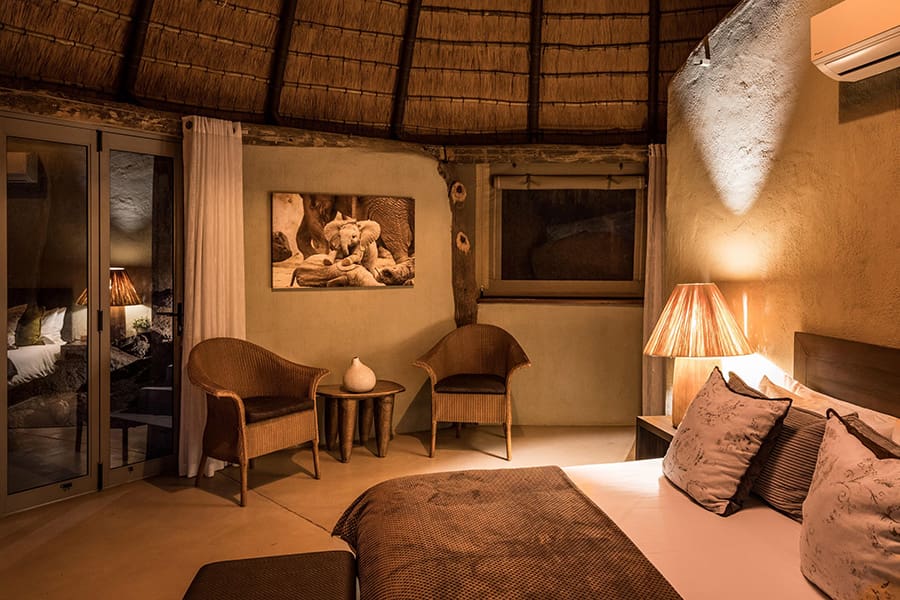
Fifteen rooms and suites are threaded through the boulders: eight View Rooms, four west-facing Superior View Rooms, one Luxury Room with a private heated splash pool, plus the Rock (Mini) Suite and the Mountain Suite. All have thatched roofs, en-suite bathrooms, air-conditioning and fans, and a private deck or veranda.
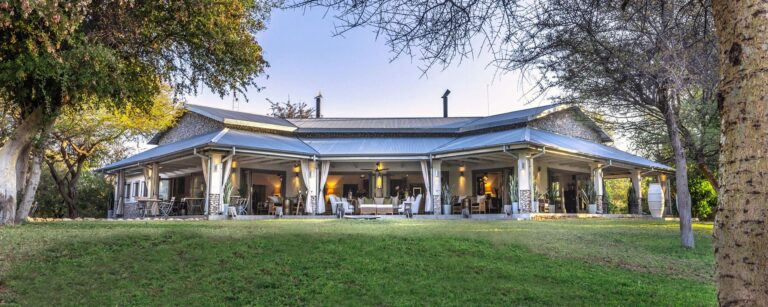
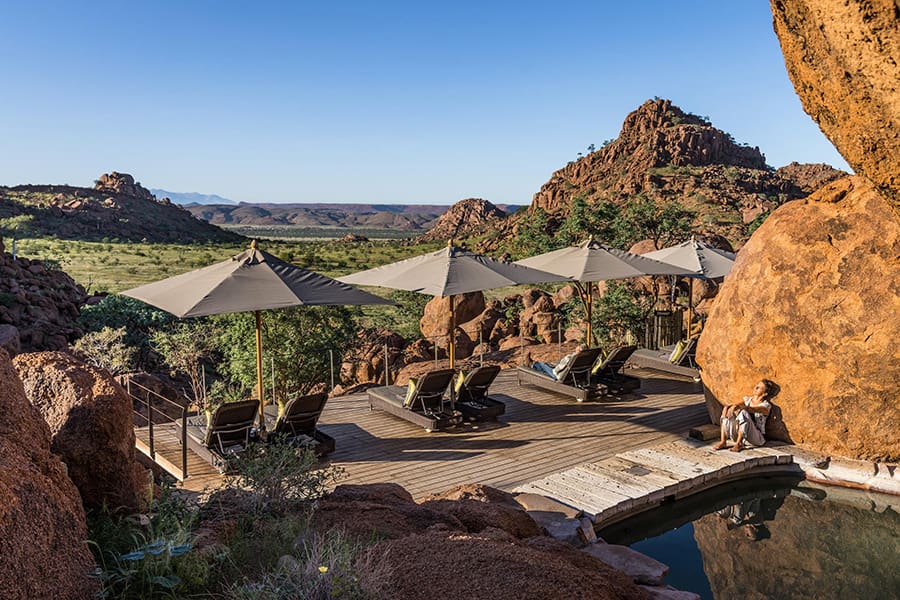
The main complex is a cluster of thatched, dome-shaped structures with a bar, lounge and dining areas, open-sided so you can sit out of the heat with a view. A swimming pool has been carved among the boulders. Evenings often start at the sundowner lookout — an enormous flat boulder with a rocky overhang that serves as a bar — looking over the Aba-Huab Valley.
After dinner, guests gather at an open fire under a dense Namibian sky. Breakfast is typically a buffet with hot dishes to order; dinner is a set multi-course meal in the dining room, with the boma used for special occasions and three-night stays.
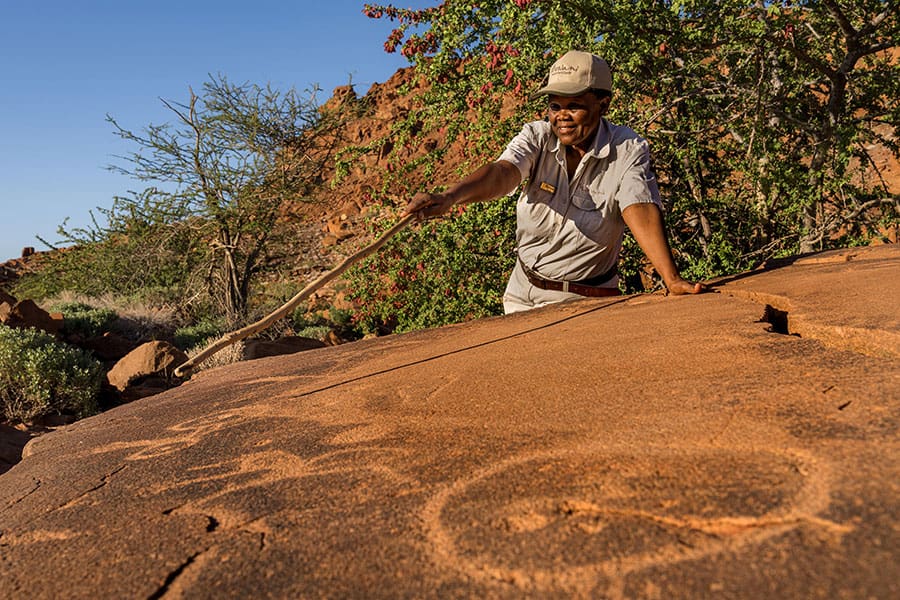
Twyfelfontein, Namibia’s first UNESCO World Heritage Site, is a short afternoon excursion: more than 2 500 Bushman engravings and paintings, often combined with Burnt Mountain and the Organ Pipes. Self-guided walking trails around camp introduce the plants and geology underfoot.
The camp is child-friendly, with special rates for ages 3–12, and it is a natural pick for couples and honeymooners — especially in the Mountain Suite, with its outdoor bath among the rocks. Most visitors stay two or three nights, often as part of a self-drive Namibia circuit.
Why We Love It
We love how this camp is absorbed into the ochre granite — the thatch and canvas sit among the boulders rather than on top of them, so every curve of rock frames a different slice of Damaraland.
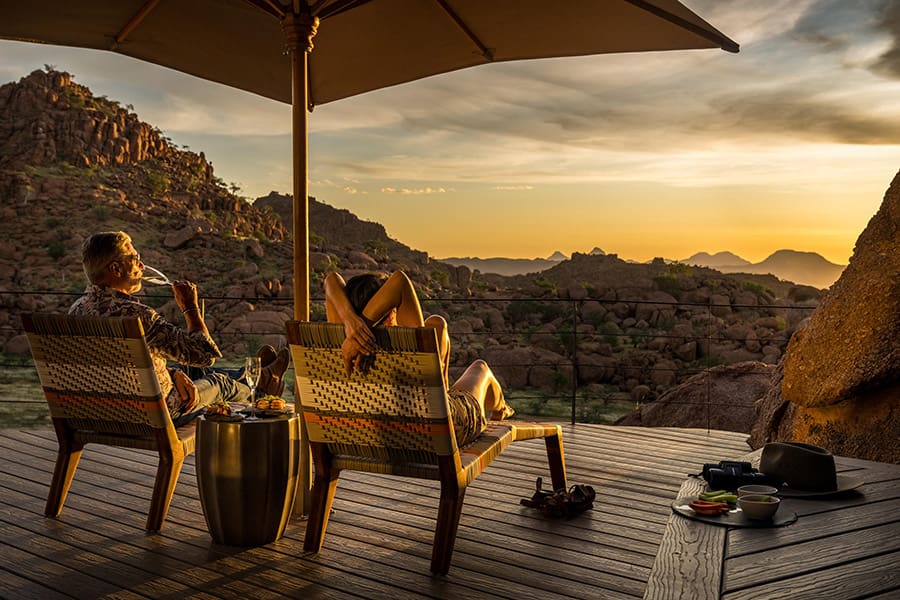
The sundowner lookout is the moment we send people here for: an enormous boulder with a rocky overhang, drinks in hand, and the Aba-Huab Valley and distant mountains going copper as the light drops. Go2Africa’s own team call it one of the best sunset lookouts they have stood on.
Days are simple and well judged. A dawn drive to track desert-adapted elephants, an afternoon among more than 2 500 San engravings at Twyfelfontein, then dinner and a fire under a dense Namibian sky. That is Damaraland, properly done.
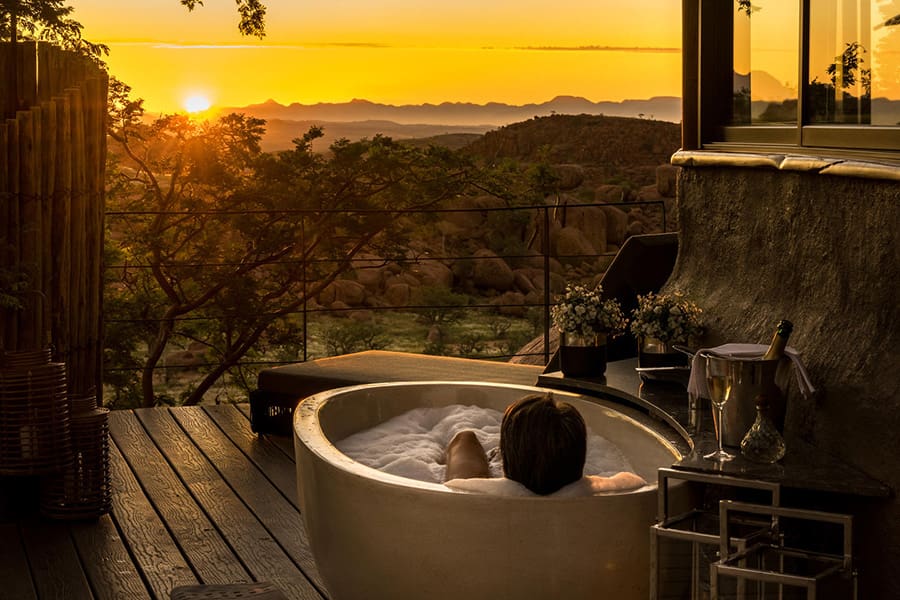
For a honeymoon we would book the Mountain Suite without hesitation — wrap-around views, a heated splash pool and an outdoor bath built around the rocks, with dinner on the balcony if you want the night to yourselves.
Rooms & Details
View Rooms
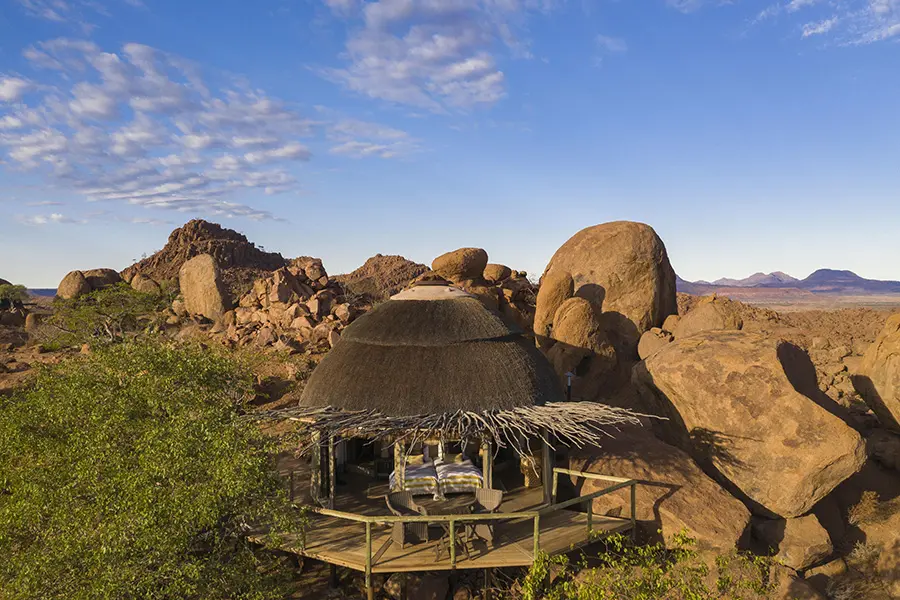
Eight View Rooms. Twin beds that convert to a king, under a thatched roof with canvas front walls that open to the view. Air-conditioning and free-standing fans, en-suite bathroom with shower, tea and coffee, fridge, hairdryer, safe, mosquito netting and limited complimentary Wi-Fi.
Views look across the valley or over a boulder-strewn slope.
Superior View Rooms
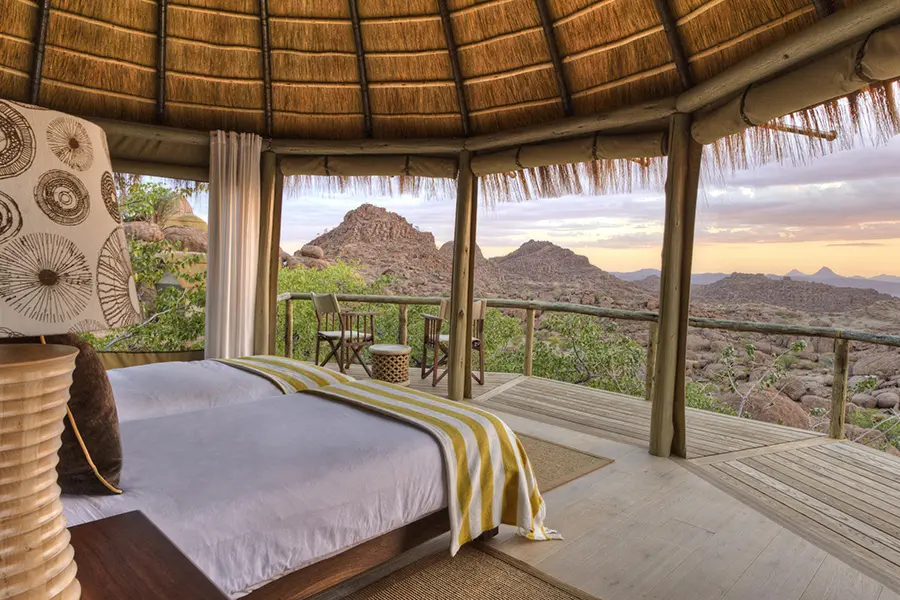
Four west-facing rooms with panoramic views, otherwise appointed as the View Rooms: twin or king, thatch and canvas, air-conditioning and fans, en-suite bathroom, balcony or deck, tea and coffee, fridge, hairdryer and safe.
Luxury Room

One west-facing thatched room behind large boulders, with glass stacking doors, air-conditioning, a king-size bed, en-suite bathroom and a private deck with a heated splash pool overlooking the valley.
Wi-Fi and private dining are available in-room or on the deck. Close to the main area, so it suits guests with limited mobility.
Rock (Mini) Suite
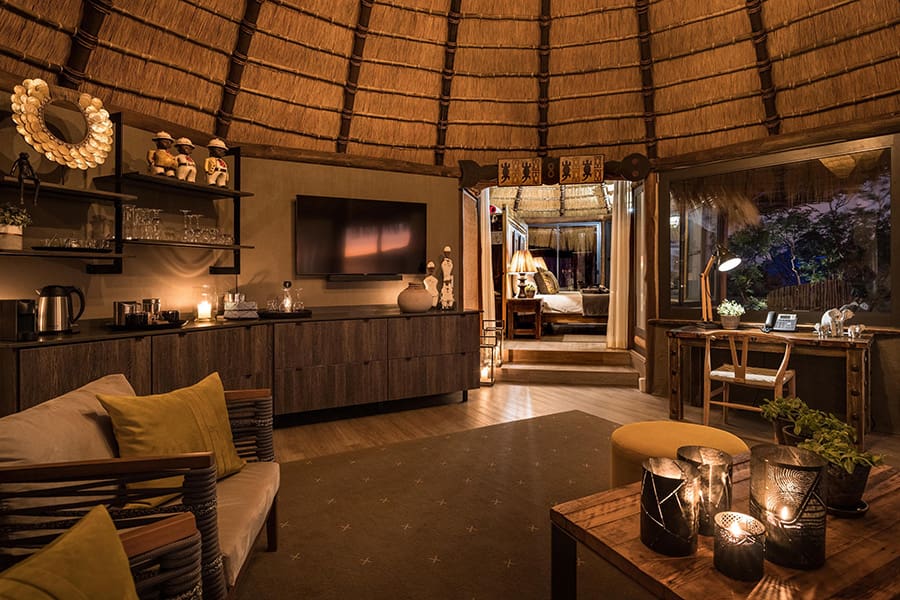
A private thatched suite cocooned in the rocks, with a heated splash pool. A lounge with satellite television and a stocked minibar leads to an air-conditioned king bedroom and an en-suite open-air bathroom tucked into the boulders.
Private dining on the rock-sheltered decks. Limited Wi-Fi and laundry included for stays of two nights or more.
Mountain Suite
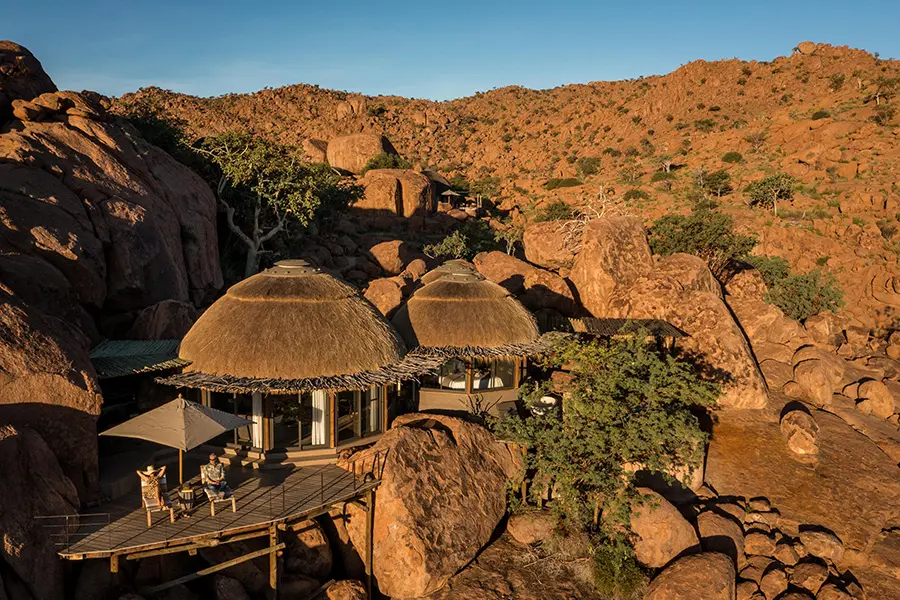
A private luxury thatched suite with wrap-around views. King-size bedroom with air-conditioning, en-suite bathroom, spacious lounge with satellite TV and soundbar, and a deck.
The outdoor area has a heated splash pool, bath, shower and sala. Butler service, private dining and bar, stocked minibar, and laundry included for stays of two nights or more. Dinner can be served on the balcony.
Swimming pool
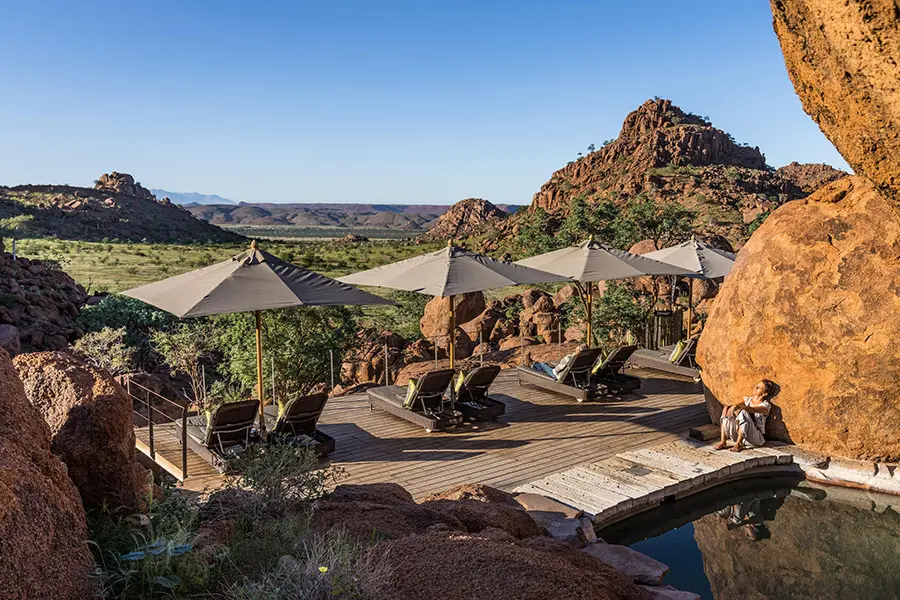
A swimming pool has been carved among the granite boulders. The main complex is a cluster of thatched, dome-shaped structures with a bar, lounge and dining areas, open-sided so you can sit out of the heat with a view.
Damaraland itineraries often run between Etosha National Park and the Skeleton Coast National Park. Other Namibia stays on this site include Wolwedans Dunes Lodge and Zannier Hotels Sonop.
Amenities & Features
Photo Gallery

Rates
Prices start from $420 per night. Final pricing depends on season, room type, and availability. Check current rates on our booking partner's site for the most accurate pricing.
What's Included
- Breakfast
- Dinner
- Guided nature drives in search of desert-adapted elephants (usually 06:30, 4–6 hours; drinks and snacks included)
- Twyfelfontein rock engravings with Burnt Mountain and the Organ Pipes (usually 15:00, about 2 hours)
- Self-guided nature walks on marked trails around camp
- Sundowners from the boulder lookout over the Aba-Huab Valley
- Bird watching
- Guided walks and hiking (longer walks subject to guide availability)
- Swimming in the boulder-carved pool
Half-board rates typically include breakfast and dinner. The guided morning nature drive includes drinks and snacks. Lunch, most drinks (except in the suites, where minibar drinks are included) and some activities are extra unless you book full board. Limited Wi-Fi. Laundry is included for the Mini Suite and Mountain Suite on stays of two nights or more; otherwise laundry is charged. Private dining is available in the suites.
Location
How to Get There
From Windhoek (approximately 5½ hours, 550 km)
The camp sits in the Uibasen-Twyfelfontein Community Conservancy in Damaraland. Windhoek is about 550 km away (Hosea Kutako International Airport is listed at 590 km). Most guests self-drive via the C39; Mowani is a 3 km drive off the D2612, a turning opposite the entrance to Camp Kipwe. The turn-off is signposted before the Twyfelfontein site.
From Swakopmund (approximately 4 hours, 320 km)
Swakopmund is about 320 km. From the coast, the C35 via Uis towards Khorixas connects to the D2612; turn off to Mowani where signposted.
From Twyfelfontein Airstrip (approximately 20 minutes, 15 km)
Scheduled and private charter flights land at Twyfelfontein Airstrip (about 15 km; airstrip GPS S20° 32.021 E14° 22.733). Road transfers take around 20 minutes.
From Khorixas or Uis
Khorixas is approximately 92 km east; Uis is approximately 122 km south. A four-wheel-drive is recommended.
Nearby Attractions
Twyfelfontein UNESCO World Heritage Site (more than 2 500 San rock engravings), Burnt Mountain, Organ Pipes, Petrified Forest, Damara Living Museum, Aba-Huab Valley, desert-adapted elephants in the dry riverbeds
Things to Do
At the property
Cool off in the swimming pool carved among the boulders, then climb to the sundowner lookout — a huge flat rock with a rocky overhang that serves as a bar — for views over the Aba-Huab Valley. Follow the short self-guided walking trails with plant and geology notes, or ask a guide for a longer walk if one is available. Bird watching from decks and the main area is easy. Evenings settle around the fire after a three-course dinner.
In the area
Guided nature drives usually leave at 06:30 and last four to six hours, tracking desert-adapted elephants and other wildlife in this arid landscape; drinks and snacks are included. The scenery itself is the other half of the day: gravel plains, granite kopjes and wide Damaraland light.
Day trips
The mid-afternoon excursion (usually 15:00, about two hours) takes in Twyfelfontein’s UNESCO rock engravings — more than 2 500 San paintings and petroglyphs — together with Burnt Mountain and the Organ Pipes. Self-drive guests can also visit the Petrified Forest and the Damara Living Museum independently or with a lodge guide. Tracking elephants is best left to camp guides in their own vehicles.
Good to Know
Children: The camp is child-friendly. Children under 3 stay free of charge. Children aged 3–12 can be accommodated in a children’s tent or on camping beds in the parents’ room at a child rate; camping beds are limited. Two rooms have an adjacent children’s tent. The site is high among rocks with drop-offs and no safety rails, so younger children need close supervision.Power: Electricity with a back-up generator. Plugs are 220/240 V, round 3-pin 15-amp or 2-round-pin. Type D/M adaptors are useful.Connectivity: Limited Wi-Fi because of the remote location. Cellphone reception is also limited.Payments: Mastercard and Visa are accepted, as well as Namibian dollars, South African rand and US dollars.Weather: Pack for hot and cold all year. Midsummer can reach about 38°C; winter days 18–25°C with nights below freezing.Malaria: Expert Africa recommends malaria protection. The nearest doctor is in Khorixas; emergencies are flown to Windhoek.Wildlife: The camp has expanded its waterhole for a local elephant herd of about 18. Overnight security is on duty and a gate is locked once guests are back in camp.
Who It's For
Couples and honeymooners (especially in the Mountain Suite), self-drive travellers spending two or three nights in Damaraland, and families with well-behaved children. Go2Africa flags it as perfect for honeymooners and couples; children under 12 are welcome. Less ideal for very young children because of rocky drop-offs and an adult atmosphere with no dedicated kids’ programme.
Best Time to Visit
The camp is open all year. May–October is cooler and clearer for walking and wildlife; August–September is widely regarded as peak. Summer days can reach about 38°C; winter nights can drop below freezing. Rain, when it comes (October/November–March), is usually brief.