
Private Mobile Safaris: The Glamping Trend Taking Africa Back to Its Roots
A century ago, every safari was a mobile safari. Now the camp-that-follows-you is back, with walk-in tents, bucket showers and a chef at the fire. Here is how mobile camps work in Botswana and the Serengeti, South Africa’s closest equivalent, and how to add one to a Kruger safari.
A century ago, every safari was a mobile safari. Canvas, camp beds and a cook travelled with you from one campsite to the next, and permanent lodges were almost unheard of. Now that style is back, minus the hardship, and it is one of the most talked-about ways to glamp in Africa for 2027.
On a private mobile safari, the camp follows you. A crew drives ahead, sets up spacious walk-in tents with proper beds and en suite bucket showers in a remote spot, and has dinner on the fire by the time you arrive from your afternoon drive. Next morning, while you are out looking for lions, they pack it all up and move on. Here is how mobile camps work, where to do one, and how to add one to a South African safari.
Four ways to do a mobile safari
| Style | How it works | Best for |
|---|---|---|
| Private mobile expedition | Your own tents, chef, guide and crew move with you from site to site | Couples, families and friends who want the full experience |
| Seasonal mobile camp | A small camp that relocates a few times a year to follow the wildlife, often the Great Migration | Travellers who want the feel of a mobile camp with more comfort |
| Fly camp | A simple overnight camp set up away from your lodge for one or two nights | Adding a taste of mobile camping to a lodge stay |
| Private walking camp | A small exclusive camp built around walking, sometimes moved with the season | Walkers and repeat visitors |
What a mobile camp is like
The tents are large walk-in tents, tall enough to stand in, with proper beds and good linen. Each has a private bathroom area with a flush or eco toilet and a bucket shower: a canvas bag of hot water hung overhead, filled by the crew whenever you ask. Lighting is by lantern or solar lamp. There is a mess tent for meals, a fire pit and a bar.
It is simpler than a luxury lodge. There are no plunge pools, and Wi-Fi is often limited or absent. What you get instead is a camp with nobody else around, sometimes for many kilometres, and a crew whose whole job is looking after a handful of guests. Most people find that the trade is well worth it.
Where to do a mobile safari
Botswana: the home of the private mobile safari
Botswana’s Okavango Delta, Moremi, Khwai and Chobe are the classic mobile safari regions, with the dry season from May to October the best time to go. Expeditions often combine game drives, walks and mokoro trips in dugout canoes.
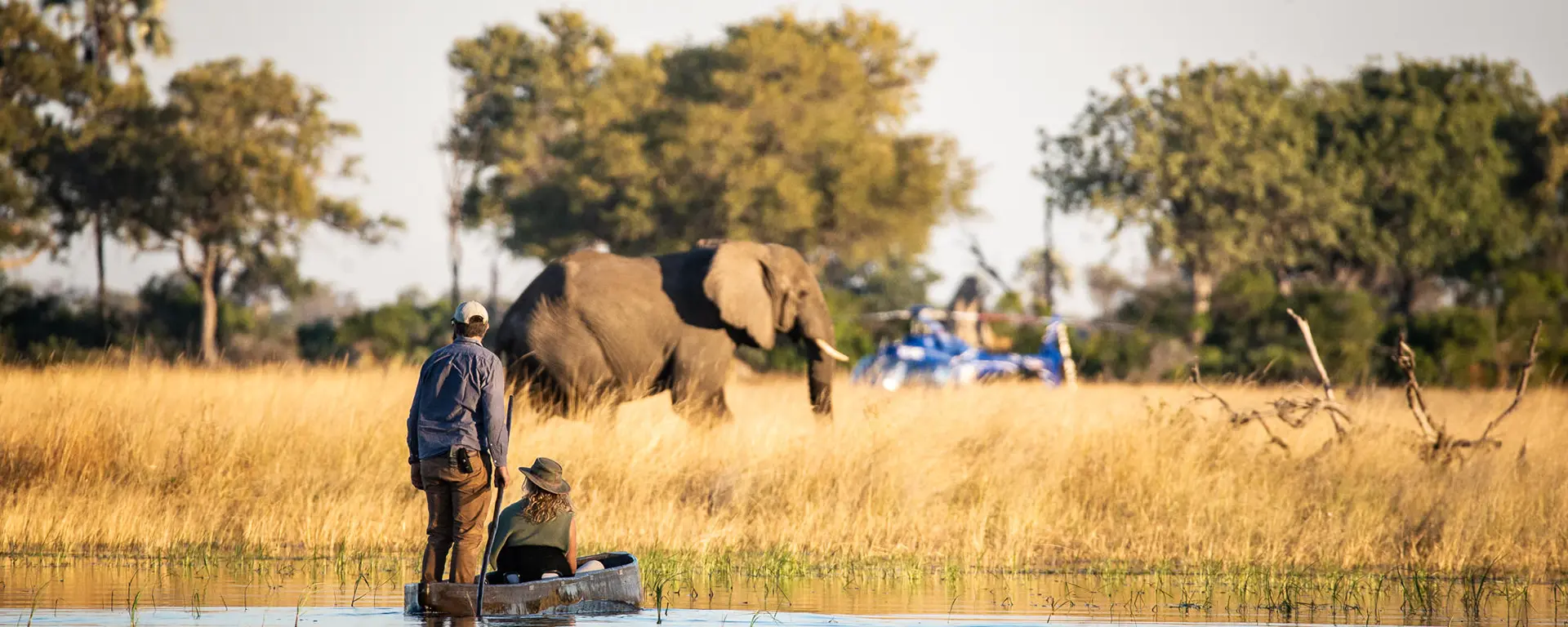
Kweene River Camp, Okavango Delta: part of the Kweene River Trails mobile expedition in the 30,000-hectare Abu Private Reserve. You arrive by helicopter to a camp the team has already set up, with mesh-walled tents, bucket showers, compost toilets, Egyptian cotton linen and a private chef. Day and night drives, walks and seasonal mokoro trips make up the days. Guide rates start from about $1,440 per person per night.
See rates and availability for Kweene River Camp
Tanzania: following the Great Migration
In the Serengeti, mobile camps move a few times a year to stay close to the wildebeest. They head to the southern plains for the calving season, usually around January and February, and north towards the Mara River crossings from about July to October.
Serengeti Under Canvas: andBeyond’s migration camp has eight walk-in tents with bucket showers, lamp lighting and a personal butler. It moves with the herds, and it is surprisingly good for families, with a family tent, childminders and private vehicles that can return to camp whenever little ones need a break. Guide rates run from about $1,115 to $1,690 per person per night.
See rates and availability for Serengeti Under Canvas
Other Serengeti mobile camps include Bologonya Under Canvas in the far north, and Sanctuary’s Kichakani Serengeti Camp, which moves with the migration and runs on solar power.
Fly camping at Mwiba: for a shorter taste, Mwiba Lodge in its private reserve next to the Serengeti offers overnight fly camps out in the bush. See Mwiba Lodge
South Africa: the closest thing to a mobile camp
South Africa is a lodge country, but it has its own version of the mobile experience.
Tanda Tula Field Camp, Timbavati: four canvas tents with open-air bathrooms, for up to eight guests, and the whole camp is yours. There is no electricity, meals are cooked over coals, and days are built around long walks with expert guides. The camp runs from March to October and its location shifts with the season and the game viewing, which is as close to a classic mobile camp as Greater Kruger gets.
See rates and availability for Tanda Tula Field Camp
Bush camping from Tanda Tula Safari Camp: Tanda Tula’s main camp also offers an optional overnight bush camping excursion as part of its walking safaris, a good way to try a night out without committing to a full mobile trip.
Phinda’s pop-up sleep-out: in KwaZulu-Natal, Phinda sets up beds with mosquito nets, a fire and dinner at the end of an afternoon drive, with a ranger on watch until dawn. See more in our guide to star beds and sleep-outs.
How to add a mobile safari to a South African trip
The easiest way is to pair a few nights in Greater Kruger with a mobile leg further north.
- Kruger and Botswana: start with three nights at a tented camp in the Sabi Sand or Timbavati, fly via Johannesburg to Maun, then spend four nights on a mobile expedition in the Okavango or Khwai.
- Kruger and the Serengeti: combine Greater Kruger with a Serengeti migration camp, flying via Johannesburg to Kilimanjaro or Arusha.
- Kruger on foot: stay at Tanda Tula Safari Camp, then move to the Field Camp for a few nights of walking.
Is a private mobile safari worth it?
Choose one if you have done a lodge safari before and want something wilder, you love the idea of having a remote corner of Africa to yourself, or you are travelling as a group and can share the cost of a private crew.
Think twice if you need a plunge pool, air conditioning and reliable Wi-Fi, or if you are not comfortable with bucket showers and simple bathrooms. Also bear in mind that Botswana and Tanzania are malaria areas, so you will need to plan for that.
What to pack for a mobile safari
- A soft duffel bag. Light aircraft and vehicles have strict luggage limits, often 15 to 20 kg.
- Neutral layers for warm days and cold dawns.
- A good head torch and spare batteries.
- Insect repellent and antimalarials, if advised by your travel clinic.
- A power bank, as charging can be limited.
Our full safari packing list has the rest.
Frequently asked questions
What is a private mobile safari?
It is a safari where your own camp, crew, chef and guide move with you from one remote campsite to the next. The crew sets up and packs down the camp, so all you do is enjoy the wildlife.
Do mobile camps have proper bathrooms?
Yes, but simpler ones. Each tent usually has a private toilet, either flush or eco, and a bucket shower with hot water on request.
How much does a mobile safari cost?
It varies widely. Guide rates for Serengeti Under Canvas start from about $1,115 per person per night, and Kweene River Camp in Botswana from about $1,440. Fully private expeditions with your own crew cost more, especially for small groups.
Can you do a mobile safari in South Africa?
Full mobile safaris are rare in South Africa, but Tanda Tula Field Camp in the Timbavati is a private walking camp that moves with the season, and Tanda Tula Safari Camp offers overnight bush camping.
When is the best time for a mobile safari?
May to October in Botswana. In the Serengeti, January to February for the calving season in the south and July to October for the northern river crossings.
Are mobile safaris suitable for children?
Some are. Serengeti Under Canvas welcomes children with a family tent, childminders and private vehicles. Many private Botswana expeditions also take families, but check age limits.
Follow the herds
A mobile safari takes glamping back to where it started: a tent, a fire, a good meal and nothing but wilderness around you. Start with a lodge stay in South Africa, add a mobile leg in Botswana or Tanzania, and you have a trip that covers the best of both. See what else is shaping next year in Glamping Trends 2027, or read our guide to exclusive-use camps.