Glamping vs Safari Lodge: Which Should You Book?
On the same reserve in the Timbavati, a night in a tent costs more than a night in a thatched cottage. Canvas is no longer the budget choice. Here is how tented camps and safari lodges compare on price, comfort, safety, children and privacy, and how to choose the right one for your trip.
On the same 14,700-hectare reserve in the Timbavati, a night in a tent costs more than a night in a thatched cottage. At Ngala, the tented camp is the smaller, more exclusive option, and it is priced that way. That one fact tells you most of what you need to know about tents versus lodges on safari in 2027: canvas is no longer the budget choice.
So how do you choose? Both get you the same animals, the same guides and the same sunsets. The difference is in how you sleep, how much of the bush you let in, and who you share the experience with. Here is a side-by-side to help you decide.
What is the difference?
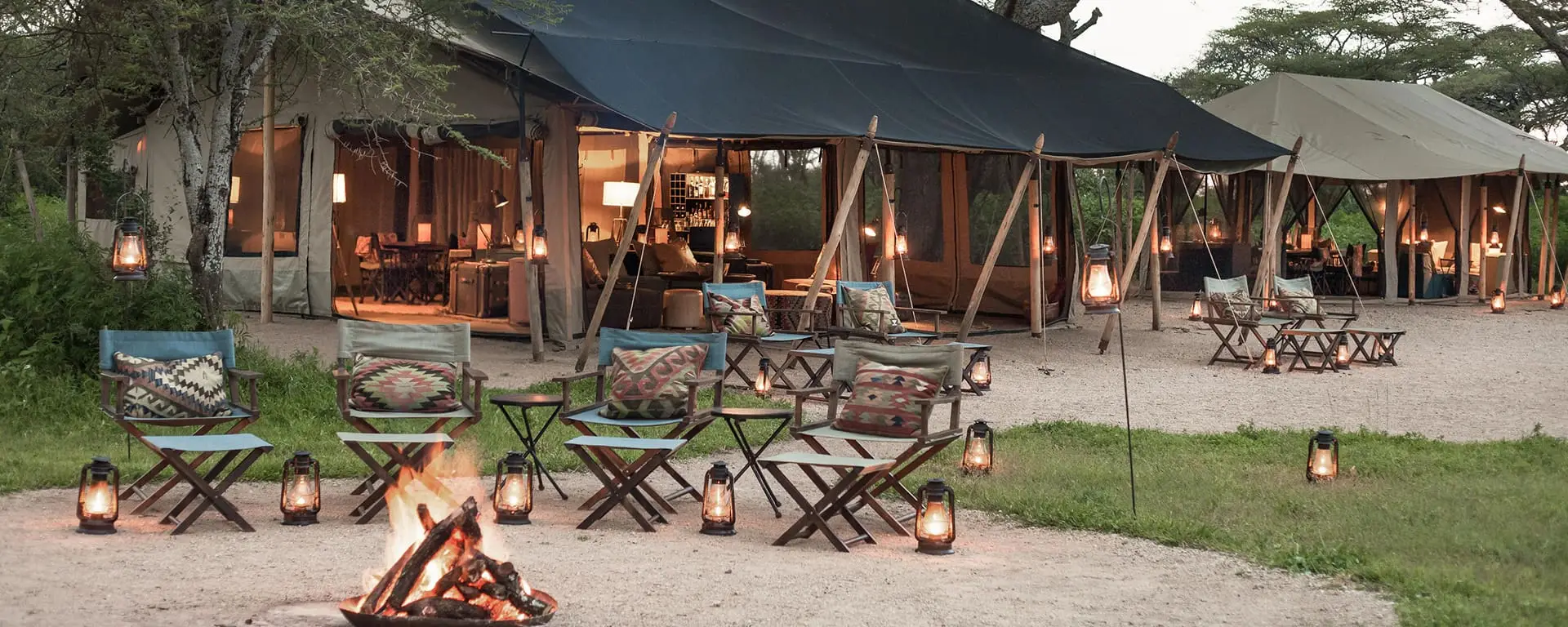
A tented camp houses guests in canvas-walled suites, usually on raised wooden platforms, with a proper bed, an en suite bathroom and a private deck. At the top end you will find plunge pools, air conditioning and outdoor baths. Camps are typically small, often six to twelve tents.
A safari lodge uses solid buildings: thatched cottages, stone suites or glass-and-timber villas. Lodges tend to be a little larger, with more facilities such as gyms, children’s clubs and spas.
Plenty of stays sit in between, with canvas roofs over solid walls or glass fronts behind canvas canopies. For a full rundown of the styles, read What Is a Tented Camp?
Tented camp vs safari lodge at a glance
| Factor | Tented camp | Safari lodge |
|---|---|---|
| Feel | Close to the bush, every sound comes through | More insulated and hotel-like |
| Size | Usually small, 4 to 12 tents | Often larger, 10 to 20+ rooms |
| Price | Ranges from budget to ultra-luxury | Ranges from budget to ultra-luxury |
| Temperature | Feels the heat and cold more, though many have air conditioning and heaters | Easier to keep warm or cool |
| Privacy | Tents spaced apart, but canvas carries sound | Solid walls, better sound privacy |
| Children | Often have minimum ages | More likely to have kids’ clubs and family rooms |
| Facilities | Pool, boma and lounge, sometimes a small spa | Often a spa, gym and more communal spaces |
| Atmosphere | Intimate and sociable | Can be livelier, with more guests |
A real example: Ngala Tented Camp vs Ngala Safari Lodge
andBeyond runs both on the same private reserve next to Kruger, so it is a fair comparison.
| Ngala Tented Camp | Ngala Safari Lodge | |
|---|---|---|
| Rooms | 9 tents | 20 thatched cottages |
| Guide rate (per person per night) | $1,625 to $1,840 | $1,180 to $1,300 |
| Children | From 12 | Under 12 welcome, with child-minding |
| Rooms include | Bath, outdoor shower, deck, electric blankets, air conditioning | Air conditioning, verandah, indoor and outdoor showers |
| Best for | Couples, walking safaris, quiet | Families, groups, first-timers |
Guide rates per person sharing, fully inclusive, checked October 2026. Confirm before you book.
The tented camp is smaller and more private, which is largely why it costs more. The lodge is better value and far easier with young children.
See Ngala Tented Camp or Ngala Safari Lodge
Five common worries about tents, answered
Is it safe to sleep in a tent on safari?
Yes. Animals generally treat a closed tent as a solid object and leave it alone. Tents at reputable camps are raised or built on solid bases, zip or lock closed, and a guide walks you to and from your tent after dark. You stay inside at night, and you will hear plenty, which is a big part of the appeal.
Will I be too hot or too cold?
Not at a good camp. Many tented camps, including Saseka, Simbavati Hilltop and Ngala, have air conditioning, and winter nights come with heaters, electric blankets or hot water bottles. The exception is the simplest camps, like Tanda Tula Field Camp, which has no electricity at all.
What about insects?
Tents have fine mesh panels that zip shut, so they keep insects out better than you might expect. Keep the mesh closed in the evening and you will rarely have a problem.
Will I sleep well with all the noise?
Most people settle in by the second night. The sounds at night, hyenas whooping, lions calling, hippos grunting, quickly become part of the background. Light sleepers might want earplugs for the first night.
Is a tent less luxurious than a lodge?
Not anymore. Tented suites at Masiya’s Camp are about 230 square metres with heated plunge pools and underfloor heating. How luxurious your stay feels comes down to the camp you choose.
Choose a tented camp if you…
- Want to feel close to the bush and hear it at night.
- Prefer a small, intimate camp with only a handful of other guests.
- Are travelling as a couple or on your honeymoon. See our most romantic glamping stays.
- Love walking safaris and a more rustic, classic style.
- Want a story to tell when you get home.
Choose a safari lodge if you…
- Are travelling with young children who need a kids’ programme or family rooms.
- Are a very light sleeper or sensitive to heat and cold.
- Want more facilities, such as a gym, a larger spa or several pools.
- Need easier access, as lodges often have fewer steps and walkways.
- Want the lower price per night, as at Ngala.
Or do both
You do not have to choose. Many travellers split their stay: two or three nights at a lodge, then two nights at a tented camp, or the other way round. Some reserves make this easy, with a lodge and a tented camp side by side, or a star bed you can add for one night.
- Ngala: stay at the Safari Lodge with the family, then add the Ngala Treehouse for a night.
- Tswalu: stay at The Motse, then try the Malori Sleepout under Kalahari skies.
- Tanda Tula: stay at the Safari Camp, then move to the Field Camp for a few nights on foot.
Read more in our guide to star beds and sleep-outs in Africa.
Frequently asked questions
Is a tented camp cheaper than a safari lodge?
Not always. At Ngala, the tented camp costs about $1,625 to $1,840 per person per night, while the safari lodge is about $1,180 to $1,300. Smaller, more exclusive tented camps often cost more.
Do tented camps have proper bathrooms?
Yes. Luxury tented camps have en suite bathrooms with flush toilets, hot showers and often baths and outdoor showers.
Are tented camps good for families?
Some are, but many set minimum ages, often 12 or older. Lodges usually have more family rooms and children’s programmes. Check the policy before booking.
Do tented camps have Wi-Fi?
Many do, at least in the main area. Some of the simplest camps have none, which many guests enjoy.
What is better for a first safari, a lodge or a tented camp?
Either works. A tented camp gives you a more memorable first experience of the bush, while a lodge feels more familiar. Many first-timers do one of each.
What does glamping mean on safari?
Glamping is short for glamorous camping. On safari, it usually means staying in a luxury tent with a real bed, an en suite bathroom and full meals, rather than camping in the traditional sense.
Find your style
Lodge or tent, the animals will not mind either way. Pick the style that matches how you want to feel at the end of the day, and if you cannot decide, do both. Start with the best luxury tented camps in South Africa, or browse every way to stay on Glamping In Africa.