Where to stay in South Luangwa National Park
Showing 13–22 of 22 glamping camps and lodges in and around the park.

Time + Tide Mchenja

Nsefu Camp

Three Rivers Camp

Lion Camp

Tafika Camp

Chikoko Tree Camp

Time + Tide Kakuli

Time + Tide Nsolo
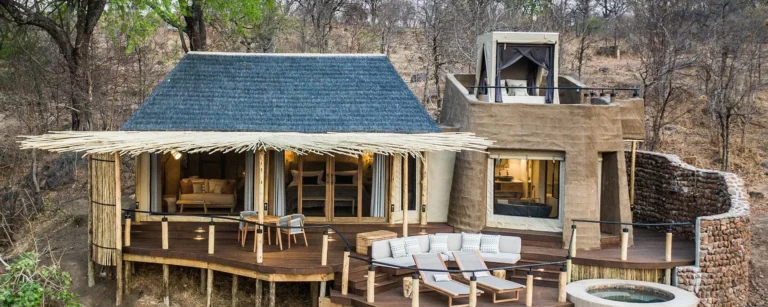
Puku Ridge Camp

Luambe Conservation Project
South Luangwa National Park guide
Overview
South Luangwa National Park covers about 9,050 square kilometres of the Luangwa Valley in eastern Zambia. The valley is the southern tail of the Great Rift system. Most of the park lies on the west bank of the Luangwa River, between the river and the Muchinga Escarpment, with the smaller Nsefu sector on the east bank. The main entry point is Mfuwe, roughly an hour’s flight from Lusaka.
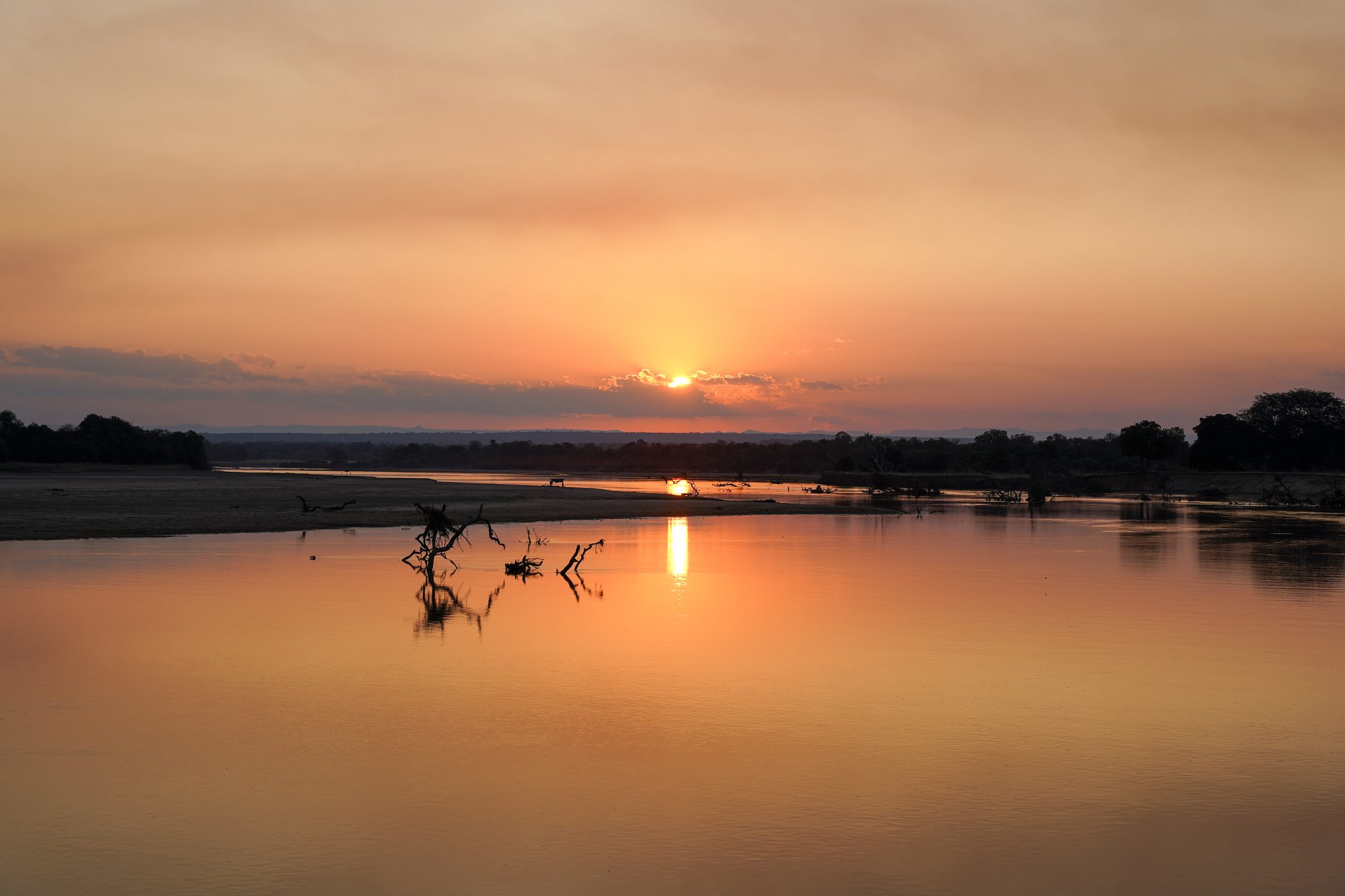
The river defines the park. It meanders in wide loops, cutting new channels each rainy season and leaving oxbow lagoons behind. Those lagoons, and the ebony, mahogany and leadwood groves along the banks, concentrate game in the dry months. The result is some of the densest wildlife viewing in southern Africa, in a park that sees far fewer vehicles than the big names in Kenya, Tanzania or South Africa.
South Luangwa is where the walking safari began. Norman Carr took paying guests out on foot here in the 1950s, and walking remains the park’s signature. Most camps offer guided walks with an armed scout, and several run dedicated walking trails between small bush camps. Night drives are also permitted, which is not the case in many East African parks. That is a large part of why the park has a reputation for leopard.
Accommodation splits into two types. Around Mfuwe and the main gate there are larger lodges and good-value camps, many open year-round. Deeper in the park, in the south towards the Kapamba and Lusangazi rivers and in the north around the Nsefu sector, operators such as Time + Tide, Robin Pope Safaris, The Bushcamp Company and Remote Africa run small seasonal bush camps of four to six rooms. These are rebuilt each year from reed, thatch and canvas after the rains. They are the closest thing in Zambia to classic glamping: real beds and en-suite bathrooms, but open-sided rooms and almost nothing between you and the bush.
Prices run from mid-range at the Mfuwe lodges to premium at the remote bush camps, where rates are usually fully inclusive of meals, drinks, activities and park fees. Most visitors spend four to seven nights, often split between a lodge near Mfuwe and one or two bush camps. South Luangwa pairs naturally with the Lower Zambezi for a canoe-and-walking itinerary, or with Lake Malawi, which is a road transfer away.
Wildlife & Biodiversity
Leopard and other predators
South Luangwa is one of the most reliable places in Africa to see leopard. The riverine woodland suits them, and night drives let you follow them when they are most active. Lion prides are well established along the river, and some are large. Spotted hyena are common. African wild dog den in parts of the valley and are seen most often in the early dry season, though sightings are never guaranteed.
Valley specials
Isolation in the valley has produced local forms you will not see elsewhere. Thornicroft’s giraffe is found only in the Luangwa Valley. Cookson’s wildebeest and Crawshay’s zebra are the valley’s other specials, the wildebeest mainly in the more open country to the north. Puku, an antelope uncommon elsewhere in southern Africa, is everywhere on the floodplains.
Elephant, buffalo and river life
Elephant are numerous and relaxed, and in the dry season they cross the river daily. Large buffalo herds move through the valley. The Luangwa holds one of the highest concentrations of hippo in Africa, and by September and October pods crowd into the remaining pools. Nile crocodile are common on the sandbanks.
Plains game
Impala, kudu, bushbuck, waterbuck, warthog and zebra are seen on most drives. Eland, roan and sable occur but are less common.
Birding
Over 400 bird species have been recorded. From around September to November, colonies of southern carmine bee-eaters nest in the riverbanks. Yellow-billed storks, saddle-billed storks and crowned cranes gather on the lagoons as the water drops. The rainy season brings migrants from Europe and northern Africa and the best birding of the year.
Best Time to Visit
Short answer: June to October for game viewing and walking, when the bush thins out and animals gather at the river. November to April is the green or "emerald" season: cheaper, quieter and beautiful, but most remote bush camps close.
| Months | Season | What to expect |
|---|---|---|
| May – June | Early dry season | Bush still green and thick. Bush camps reopen. Cool nights and pleasant days. Good value before peak rates start. |
| July – August | Cool dry season | Peak walking season. Game concentrates as water sources shrink. Cold early mornings and night drives. Peak rates. |
| September – October | Hot dry season | The best game viewing of the year. Hippo crowd the pools, carmine bee-eaters nest in the banks. Daytime heat often exceeds 40°C in October. |
| November – December | First rains | Storms break the heat and the valley turns green. Impala and puku drop their young. Most bush camps close; Mfuwe-area lodges stay open. |
| January – April | Emerald season | Heavy rain, lush growth and excellent birding. Some roads close and game is more dispersed. A few camps run boat safaris on the high river. Lowest rates. |
If you want the remote walking camps, plan for June to October and book early: they are small and fill a year ahead. If price and photography matter more than ticking off species, the lodges near Mfuwe in the emerald season are a strong option.
Getting There
By air
Almost every visitor arrives through Mfuwe Airport, about 30 minutes’ drive from the main gate. Camps meet guests at the airport and include the transfer in their rates.
| Airport | Best for | Notes |
|---|---|---|
| Mfuwe Airport (MFU) | All South Luangwa camps and lodges | Scheduled flights from Lusaka of roughly 1 hour 15 minutes, mainly with Proflight Zambia. Charter flights link it to the Lower Zambezi and Livingstone. |
| Kenneth Kaunda International, Lusaka (LUN) | International arrivals | Zambia’s main international gateway, with connections via Johannesburg, Nairobi, Addis Ababa and the Gulf. |
| Kamuzu International, Lilongwe (LLW) | Combining with Malawi | Road transfer to Mfuwe via Chipata takes roughly 5 to 6 hours, including the border crossing. |
By road
From Lusaka, the Great East Road runs to Chipata, and a tarred road continues to Mfuwe. Allow 9 to 10 hours for the full drive. Most self-drivers break the journey overnight, often around Petauke or Chipata. A high-clearance 4×4 is needed inside the park, and many park roads are impassable in the rains from about December to April.
The main entry is the Mfuwe Gate, reached across the bridge over the Luangwa River. The Nsefu sector, in the north-east, has separate access. Remote bush camps in the south are reached by long transfers from Mfuwe, usually arranged by the camp.
Entrance & Fees
Entry to South Luangwa is charged per person per day by Zambia's Department of National Parks and Wildlife (DNPW). If you stay at a lodge or camp, the fee is normally added to your bill or included in a fully inclusive rate, so you rarely pay at the gate yourself. The figures below are those published by a Mfuwe-based camp for 2026.
| Visitor category | Fee | Applies to |
|---|---|---|
| International visitor | US$25 per person per day | Guests on lodge-guided activities, including night drives |
| SADC resident | US$20 per person per day | Residents of Southern African Development Community countries |
| Self-drive visitor | US$30 per person per day | Visitors driving their own vehicle, 06:00 to 18:00 |
Zambian citizens and residents pay lower rates in kwacha. Vehicle entry fees also apply to self-drivers. Fees can rise without much notice, and camps pass increases on to guests, so confirm the current rate with your lodge or DNPW before you travel. Many camps also add a small community or conservation levy, which is separate from park entry.
Fees last checked October 2026 against Flatdogs Camp 2026 rates.