
Where to stay in Maasai Mara National Reserve
Showing 1–12 of 53 glamping camps and lodges in and around the park.

Ishara Mara
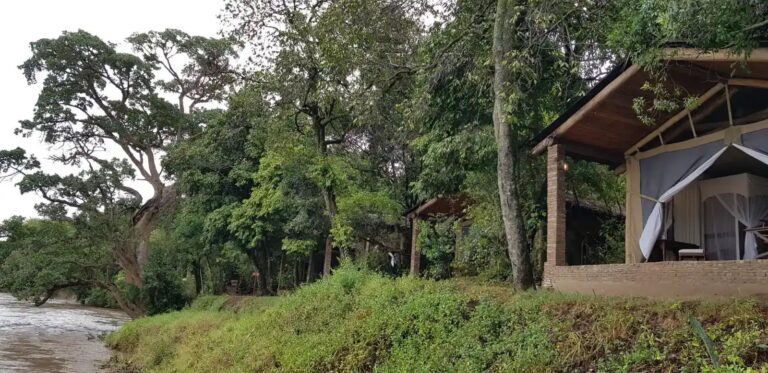
Fig Tree Camp

Talek Bush Camp

Mara Explorer

Naibor Luxury Camp

Rekero Camp
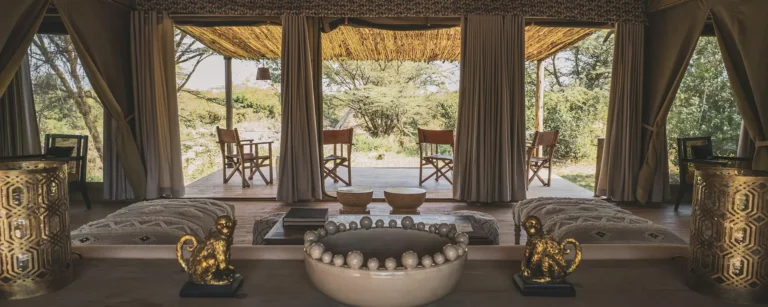
Ilkeliani Camp

Entim Mara Camp

Mara Ngenche Safari Camp

Tipilikwani Mara Camp

Sala’s Camp

PrideInn Mara Camp
Maasai Mara National Reserve guide
Overview
The Maasai Mara is the Kenyan end of the Serengeti ecosystem, and for most of the year it is the single most productive place in Africa to watch large predators hunt. The reserve proper covers about 1,510 square kilometres of rolling grassland, riverine forest along the Mara and Talek rivers, and the escarpment country of the Mara Triangle in the west.
What the Mara offers that the Serengeti does not is compression. The game is concentrated into a much smaller area, the grass is short, and the terrain is open and gently rolling, which means sightings are close and the light is superb. It is the reason the Mara has been the backdrop to more wildlife documentary footage than anywhere else on earth — the BBC’s Big Cat Diary was filmed here, and the Marsh Pride became famous because the Mara makes lions that visible.
Understanding the Mara means understanding the split between the reserve and the conservancies. The National Reserve is managed by Narok County Government, apart from the Mara Triangle in the west, which is run separately by the Mara Conservancy and is noticeably better managed — fewer vehicles, better roads, stricter enforcement. Inside the reserve, off-road driving is prohibited, as are night drives and walking.
The conservancies — Naboisho, Olare Motorogi, Mara North, Ol Kinyei, Lemek and others — ring the reserve on its northern and eastern sides. They are leased from Maasai landowners, they cap the number of beds and therefore vehicles, and they permit night drives, walking safaris and controlled off-road driving. A conservancy camp costs more per night but delivers a materially better experience: you will routinely have a sighting to yourself.
The river crossings are what most people come for, and they are worth managing expectations about. Between roughly July and October the herds cross the Mara River, and when a crossing happens it is genuinely one of the great wildlife spectacles. But crossings are unpredictable — herds will mass at a bank for hours and then turn away — and the popular crossing points draw a great many vehicles. The conservancies and the Triangle are where you escape that.
Wildlife & Biodiversity
Big Cats
The Mara holds one of the highest lion densities in Africa, and the open terrain makes them exceptionally visible. Cheetah do well here for the same reason — short grass and clear sightlines — and the Mara is one of the few places where you have a realistic chance of watching a full cheetah hunt. Leopard are present along the riverine forest of the Mara and Talek and are seen regularly, if less reliably than in Sabi Sand.
The Migration
Between roughly July and October the wildebeest and zebra herds move up from the Serengeti and cross the Mara River. Numbers in the Mara at any one time are a fraction of the ecosystem total, and the herds move back and forth across the border repeatedly rather than arriving once. Crocodile in the Mara River reach exceptional size on the back of it.
Other Game
Elephant and buffalo are common and easily seen. Black rhino are present in small, closely protected numbers — the Mara Triangle and parts of the reserve hold the bulk of them. Hippo pods are large and noisy along both rivers. Plains game includes topi, which the Mara has in unusual abundance, along with Thomson’s and Grant’s gazelle, eland, impala, giraffe and warthog.
Birding
Around 470 species have been recorded, including some 60 raptors. The open grassland is excellent for secretary birds, bustards and ground hornbill, and the rivers hold fish eagle, saddle-billed stork and a range of herons. November to April brings the migrants.
Best Time to Visit
Short answer: Come from July to October for the migration and the Mara River crossings, which peak in August and September. Come from January to March for strong predator viewing, fewer vehicles and the lower reserve fee.
| Months | Season | What to expect |
|---|---|---|
| January to March | Dry, low season | Warm and mostly dry. Resident lion, cheetah and leopard are active and easy to find. Crowds are thin, and the low-season reserve fee applies. |
| April to May | Long rains | Heavy rain, slow roads and some camp closures. The grass grows long and green. Camp rates are at their lowest. |
| June | Shoulder | Drying out. In some years the first herds arrive from the Serengeti in late June. This is the last month of the low-season fee. |
| July to October | Migration, peak season | Wildebeest and zebra are in the Mara. River crossings can happen at any point in this window and are most frequent in August and September. Busy at the main crossing points, with peak camp rates and the high-season fee. |
| November to December | Short rains | The herds drift back south during October and November. Short showers and green grass, with good resident game. The high-season fee still applies, and Christmas is busy. |
Crossings are never guaranteed. Herds may cross several times in a day or not at all for a week, and they move back and forth over the border. If crossings are the priority, stay at least three or four nights near the river, in the Mara Triangle, the northern reserve or Mara North. If predators and space matter more, choose a conservancy camp in the first quarter of the year.
Getting There
By air
| Airport/airstrip | Best for | Notes |
|---|---|---|
| Keekorok | Central and southern reserve, camps near Sekenani | A busy scheduled stop with a short transfer to most camps in the east of the reserve. |
| Ol Kiombo | Central reserve and the Talek area | A good option for camps along the Talek River. |
| Musiara | Northern reserve, Musiara Marsh and the Governors’ camps | Close to the northern crossing points on the Mara River. |
| Mara Serena and Kichwa Tembo | The Mara Triangle and the Oloololo escarpment | Serve camps on the western bank of the Mara River. |
| Conservancy airstrips (Mara North, Olare Orok, Siana and others) | Camps in the surrounding conservancies | Scheduled stops that serve camps outside the reserve. Transfers do not enter the reserve. |
Safarilink and AirKenya fly several times a day from Nairobi Wilson. Flights take about 45 minutes to an hour, plus extra time for intermediate stops. Your camp will meet you at the closest airstrip. Luggage is usually limited to soft bags of about 15kg per person.
By road
From Nairobi, take the road south-west through Narok, which is tarred. Then follow gravel to the reserve gates. The drive takes five to six hours. The last stretch varies from acceptable to genuinely rough depending on recent rain and which gate you use. A high-clearance vehicle is sensible, and a 4×4 is essential in the wet season.
Since June 2024, Narok County has allowed game drives in the reserve only in safari vehicles: safari Land Cruisers, safari trucks and safari vans. Private cars may not be used. Check the current rule before planning a self-drive.
| Gate | Side | Notes |
|---|---|---|
| Sekenani | East | The main gate from Narok and the busiest. |
| Ololaimutiek | South-east | Near Sekenani, and serves camps in the south-east. |
| Talek | North-east | Serves Talek camps and links to the eastern conservancies. |
| Musiara | North | Serves the Musiara Marsh area and the route in from Mara North. |
| Oloololo | North-west | The main gate for the Mara Triangle. |
| Purungat Bridge | Mara River | The crossing between the reserve and the Triangle, and a Mara Conservancy ticket point. |
Entrance & Fees
Reserve fees are set by Narok County Government. The Mara Conservancy collects them in the Mara Triangle at the same rates. The current tariff took effect on 1 January 2024, doubling the peak-season adult rate. It was still being charged in 2026. Fees are per person for each 12-hour day in the reserve. They are not included in conservancy fees.
| Non-resident visitor | 1 January to 30 June | 1 July to 31 December |
|---|---|---|
| Adult (18 and over) | US$100 | US$200 |
| Child (9 to 17) | US$50 | US$50 |
| Child (8 and under) | Free | Free |
12-hour tickets. A ticket runs from 6am to 6pm and does not carry over a night. Camps inside the reserve charge a further day's fee to guests who leave after about 11am on their departure day. A balloon flight or game drive on departure morning also counts as a further day. Ask your camp exactly how it charges.
Residents and citizens. East African residents and Kenyan citizens pay lower rates in Kenyan shillings, with proof of status. The Mara Triangle does not accept cash. Pay by card or M-Pesa, either online through KAPS or at Oloololo Gate, Purungat Bridge or Serena airstrip.
Conservancies. Mara North, Naboisho, Olare Motorogi and the other conservancies charge their own daily conservation fees. Camps usually include these in the nightly rate, and the money goes to the Maasai landowners. If you drive from a conservancy into the reserve for the day, the reserve fee is added for that day.
Fees last checked October 2026 against Mara Conservancy (Mara Triangle) fees and Governors' Camp's Narok County fee notice.