
Where to stay in Tsavo West National Park
5 hand-picked glamping camps and lodges in and around the park.



Tsavo West National Park guide
Overview
Tsavo West National Park covers about 9,065 km² of south-eastern Kenya, roughly halfway between Nairobi and Mombasa. Together with Tsavo East, on the other side of the Nairobi–Mombasa highway and railway, it forms one of the largest protected areas in Africa. The two parks were declared a single national park in 1948 and later divided for management. Kenya Wildlife Service runs both.
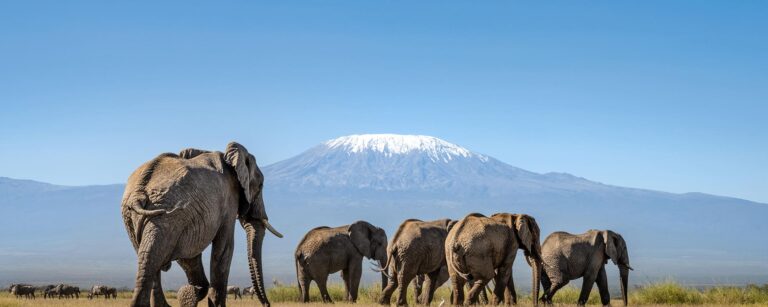
Tsavo West is the more scenic of the two. Volcanic cones, black lava flows, rocky ridges and the Chyulu Hills break up the savanna, and on clear mornings Kilimanjaro rises on the southern horizon. Its best-known site is Mzima Springs, where water from the Chyulu Hills emerges into clear pools. From an underwater viewing chamber, you can watch hippos and fish. Other highlights include the Shetani lava flow, Chaimu Crater, the Roaring Rocks viewpoint, the fenced Ngulia Rhino Sanctuary and Lake Jipe on the Tanzanian border.
The park is much less crowded than the Maasai Mara or Amboseli, and its bush is thicker, so game viewing takes more patience. In return, you get big landscapes, very few other vehicles and some of Kenya’s most atmospheric lodges and tented camps, from classic properties around Kilaguni and Ngulia to luxury tented camps along the rivers.
Tsavo West combines easily with Amboseli and the Chyulu Hills to the west, with Tsavo East, or with a beach stay on the coast. The Mombasa road and the Madaraka Express train make it accessible without flying.
Wildlife & Biodiversity
Big game
Elephant are the signature animal, and Tsavo’s herds often look red from dust-bathing in the local soil. Lion, leopard and buffalo are found throughout. Black rhino are protected inside the Ngulia Rhino Sanctuary, where sightings are possible but never easy.
Other mammals
Masai giraffe, plains zebra, lesser kudu, fringe-eared oryx, gerenuk, Grant’s gazelle, eland and hartebeest are typical of the drier country. Cheetah and wild dog are present but uncommon. Hippos and crocodiles live at Mzima Springs, in the Tsavo River and in Lake Jipe.
Birds
Tsavo West has a bird list of over 600 species. Ngulia Hills is internationally known for its autumn migrant-ringing camp. The dry country holds golden-breasted starlings, hornbills and bustards, while Lake Jipe adds waterbirds and the rare lesser jacana.
Best Time to Visit
Short answer: June to October, during the long dry season, when the bush thins and animals gather near water. January and February are a shorter dry window.
| Months | Season | What to expect |
|---|---|---|
| Jan – Feb | Short dry season | Hot and mostly dry. Good game viewing and fewer visitors. |
| Mar – May | Long rains | Heavy rain, especially in April. Some roads become difficult, and some camps close or offer low-season rates. Very green. |
| Jun – Oct | Long dry season | The best time for game viewing. Cooler, with clearer views of Kilimanjaro early in the season. |
| Nov – Dec | Short rains | Afternoon showers, fresh grazing and migrant birds. Usually still good for travel. |
Tsavo is a malaria area all year. Take prophylaxis, and cover up at dusk.
Getting There
By air
| Airport | Best for | Notes |
|---|---|---|
| Jomo Kenyatta International (NBO), Nairobi | Most international visitors | About five hours by road to Mtito Andei Gate, or a scheduled or charter flight to Tsavo West. |
| Moi International (MBA), Mombasa | Combining with the coast | About four hours by road to the Tsavo Gate. |
| Kilaguni and Finch Hattons airstrips | Fly-in safaris | Light-aircraft charters from Nairobi Wilson and the coast. Lodges arrange transfers. |
By road and rail
The A109 Nairobi–Mombasa highway runs along the park’s eastern edge. Mtito Andei Gate, about 240 km from Nairobi, is the main entrance and leads to Kilaguni and Mzima Springs. The Madaraka Express (SGR) train stops at Mtito Andei and Voi, where camps can collect guests by arrangement.
Main gates
| Gate | Best for |
|---|---|
| Mtito Andei | Main entrance from the highway; Kilaguni, Mzima Springs, Ngulia |
| Tsavo Gate | From the Mombasa side, near the Tsavo River |
| Chyulu Gate | From Amboseli and the Chyulu Hills |
| Maktau and Ziwani | Southern sector, Lake Jipe and the Taveta road |
Entrance & Fees
Kenya Wildlife Service charges a conservation fee per person for each 24-hour visit, paid in advance through eCitizen. Tsavo West and Tsavo East are ticketed separately.
| Visitor | Adult | Child / student |
|---|---|---|
| Non-resident | US$80 | US$40 |
| African citizen (non-East African) | US$40 | US$20 |
| Kenya resident | KSh 1,350 | KSh 675 |
| East African citizen | KSh 1,000 | KSh 500 |
Children aged five and under enter free. Vehicle entry is charged separately, from KSh 600 for vehicles with fewer than six seats. Many lodges and camps include park fees in their rates, so check before you pay.
Fees last checked October 2026 against the KWS conservation fee schedule (October 2025).