
Where to stay in Serengeti National Park
Showing 1–12 of 60 glamping camps and lodges in and around the park.

Lamai Serengeti Camp

Mila Tented Camp

Nyasi Tented Camp

Songa Tented Camp

Taasa Migration Camp

Serengeti Safari Camp

Serengeti Migration Safari Camp

Nyikani Central Serengeti Camp
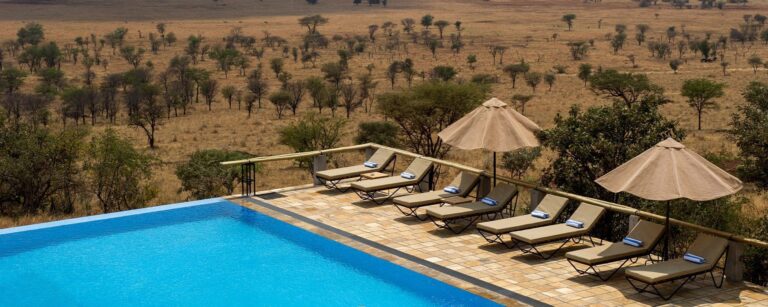
Kubu Kubu Tented Camp

One Nature Nyaruswiga Luxury Camp

Osero Serengeti Luxury Tented Camp

Olakira Migration Camp
Serengeti National Park guide
Overview
The Serengeti is the benchmark against which every other African park is measured. Nearly 15,000 square kilometres of open grassland, acacia woodland and granite kopjes in northern Tanzania, it holds the largest surviving herd migration on earth and one of the greatest concentrations of large predators in Africa.
The name comes from the Maa word siringet, meaning the place where the land runs on forever, and on the southern plains that is exactly what it does — flat grass to the horizon in every direction, broken only by the occasional kopje rising out of it like an island. Those plains are volcanic, fed by ash from the Ngorongoro highlands, and the grass they produce is what draws roughly 1.5 million wildebeest and several hundred thousand zebra through the ecosystem every year.
The park divides into four working regions, and which one you visit matters far more than when. Seronera, in the centre, has permanent water in the Seronera River and holds resident game year-round — it is the most reliable big-cat area in the park and the busiest. The southern plains, around Ndutu and the Naabi Hill gate, are where the wildebeest calve between late January and February. The Western Corridor follows the Grumeti River toward Lake Victoria and sees the herds pass through around May and June. The north, around Kogatende and Lobo, is where the Mara River crossings happen from roughly July into October, and it is the quietest and wildest part of the park.
The Serengeti is contiguous with the Maasai Mara across the Kenyan border and with the Ngorongoro Conservation Area to the south-east; together they form a single ecosystem of about 30,000 square kilometres. The animals do not recognise the boundary, which is why the migration is best understood as a continuous year-round circuit rather than an event with a date.
Accommodation runs from public campsites to mobile tented camps that move with the herds and permanent lodges built into the kopjes. The mobile camps are the reason the Serengeti is such a natural glamping destination — a properly run mobile camp puts you within a few kilometres of the migration in canvas with a real bed and a bucket shower, and then packs up and follows.
Wildlife & Biodiversity
The Great Migration
Roughly 1.5 million blue wildebeest move through the Serengeti ecosystem each year, accompanied by several hundred thousand plains zebra and large numbers of eland and Thomson’s gazelle. The circuit is driven by rainfall and grazing, not by the calendar, so the herds’ position shifts from year to year. The broad pattern: calving on the southern plains in late January and February, movement north-west through the Western Corridor around May and June, Mara River crossings in the north from July into October, and the return south as the short rains arrive in November.
Predators
The Serengeti holds one of the largest lion populations in Africa, and the prides here are unusually large and well studied — the Serengeti Lion Project has followed individual prides since the 1960s. Leopard are reliably found in the riverine trees of the Seronera valley. Cheetah favour the open southern and eastern plains, where their hunting style works. Spotted hyena are abundant and, contrary to the reputation, do a great deal of their own killing. Wild dog have recolonised parts of the ecosystem after a long absence.
Resident Game
Beyond the migratory herds the park holds elephant, buffalo, giraffe, topi, hartebeest, impala, warthog, hippo and Nile crocodile in the rivers. Black rhino are present but rare and closely protected, mostly in the Moru Kopjes area. Seronera and the north hold game year-round, so a Serengeti safari is never dependent on the migration being nearby.
Birding
Over 500 species have been recorded. Kopjes hold rock-loving specials, the plains bring bustards, secretary birds and larks, and the rivers support fish eagles, storks and herons. The November to April period brings Palearctic migrants and the best birding of the year.
Best Time to Visit
Short answer: There is no single best time, only a best time for what you want to see. Go to the southern plains in late January to March for calving, the Western Corridor around May and June, and the north from July to October for the Mara River crossings. Seronera, in the centre, is good all year.
| Months | Where the herds usually are | What to expect |
|---|---|---|
| December – March | Southern plains, Ndutu and Naabi Hill | Calving peaks in February, with hundreds of thousands of calves born within a few weeks. Heavy predator activity. Green plains and scattered showers. Ndutu lies in the Ngorongoro Conservation Area, so separate fees apply. |
| April – May | Moving north-west from the plains towards Moru and the Western Corridor | The long rains. Some camps close and roads can be hard going. Lowest rates and very few vehicles. The rut begins as the herds gather into long columns. |
| June – early July | Western Corridor and the Grumeti River | Grumeti crossings, with large crocodiles. Dry weather sets in. A good, less crowded alternative to the Mara crossings. |
| July – October | Northern Serengeti, Kogatende and Lamai, crossing the Mara River | The Mara River crossings. Peak season and peak rates. Crossings are unpredictable and can mean long waits. Some of the herds spend this period across the border in Kenya's Maasai Mara. |
| November | Moving south through Lobo and eastern Seronera | The short rains begin and the herds stream back south. Fewer visitors and shoulder-season rates. |
The herds follow the rain, not the calendar, so treat this table as a guide rather than a guarantee. A mobile camp that moves with the migration, or a lodge in Seronera where resident game is good all year, takes much of the risk out of the timing. June to October is the best time for general game viewing, as the bush is dry and animals gather near water.
Getting There
By air
Most visitors fly in. Kilimanjaro International is the main international gateway, and Arusha Airport handles most light-aircraft connections into the park. Coastal Aviation and Auric Air run scheduled circuits between the airstrips. Flying is usually the best use of time, because the park is large and road transfers between regions are slow.
| Airport | Best for | Notes |
|---|---|---|
| Kilimanjaro International (JRO) | International arrivals | Main gateway for the northern circuit. Some scheduled light-aircraft flights leave from here. |
| Arusha Airport (ARK) | Light-aircraft connections | Domestic hub for scheduled flights into the Serengeti. |
| Seronera Airstrip | Central Serengeti | The busiest and best-connected airstrip in the park. |
| Kogatende and Lamai | Northern Serengeti | For the Mara River crossing season, roughly July to October. |
| Grumeti and Kirawira | Western Corridor | For the Grumeti River and the herds around May to July. |
| Ndutu Airstrip | Southern plains | For the calving season. Ndutu is inside the Ngorongoro Conservation Area, so NCAA fees apply. |
By road
From Arusha, the drive takes 7 to 9 hours. The route runs past Lake Manyara and through the Ngorongoro Conservation Area, entering the Serengeti at Naabi Hill Gate. You pay Ngorongoro fees for the transit. Many operators turn this into a northern-circuit road safari, taking in Tarangire, Manyara and Ngorongoro before the Serengeti.
Distances inside the park are large and speed limits are enforced. A drive from Seronera to Kogatende can take most of a day.
| Gate | Location | Notes |
|---|---|---|
| Naabi Hill Gate | South-east, from Ngorongoro | Main entry for road safaris from Arusha. |
| Ndabaka Gate | Western Corridor, from Mwanza and Lake Victoria | Useful for combining with the lake region. |
| Klein’s Gate | North-east, near Loliondo | Remote access to the north and Lobo. |
Entrance & Fees
Serengeti fees are set by Tanzania National Parks (TANAPA) and charged per person for each 24-hour period inside the park. Rates differ between high and low season. Guests staying at a lodge or camp inside the park also pay a nightly concession fee. Your operator or camp normally pays these in advance and adds them to your bill.
| Visitor category | High season (16 May – 14 March) | Low season (15 March – 15 May) |
|---|---|---|
| Non-resident adult (16+), conservation fee per 24h | US$82.60 | US$70.80 |
| Non-resident child (5–15), conservation fee per 24h | US$23.60 | US$11.80 |
| Child under 5 | Free | Free |
| Concession fee, adult, per night in a lodge or camp inside the park | About US$70.80 | |
| Concession fee, child (5–15), per night | About US$11.80 | |
All figures are in US dollars for the 2026 season and include Tanzania's 18% VAT. As a guide, a non-resident adult staying one night inside the park in high season pays about US$153 in fees before the camp rate. East African citizens and residents pay lower rates in Tanzanian shillings. TANAPA gates are cashless and accept Visa or Mastercard, not cash. If you drive in from Arusha, you also pay Ngorongoro Conservation Area fees for the transit.
Fees last checked October 2026 against Duma Explorer's 2026 Tanzania park fees guide (conservation fees) and Roadtrip Africa (concession fees and payment).
