
Where to stay in Gombe Stream National Park
1 hand-picked glamping stay in and around the park.

Gombe Stream National Park guide
Overview
Gombe Stream National Park is one of the smallest national parks in Tanzania, covering about 35 km² of land on the eastern shore of Lake Tanganyika, north of Kigoma. It became a national park in 1968. Steep valleys and streams run from the lakeshore up to ridges covered in grassland, with thick forest in between.
Gombe is world-famous for its chimpanzees. In 1960, Jane Goodall began her study of the chimpanzees here, and the research she started is now the longest-running study of any wild animal population. Her discoveries, including tool use and complex social behaviour, changed how we see our closest relatives.
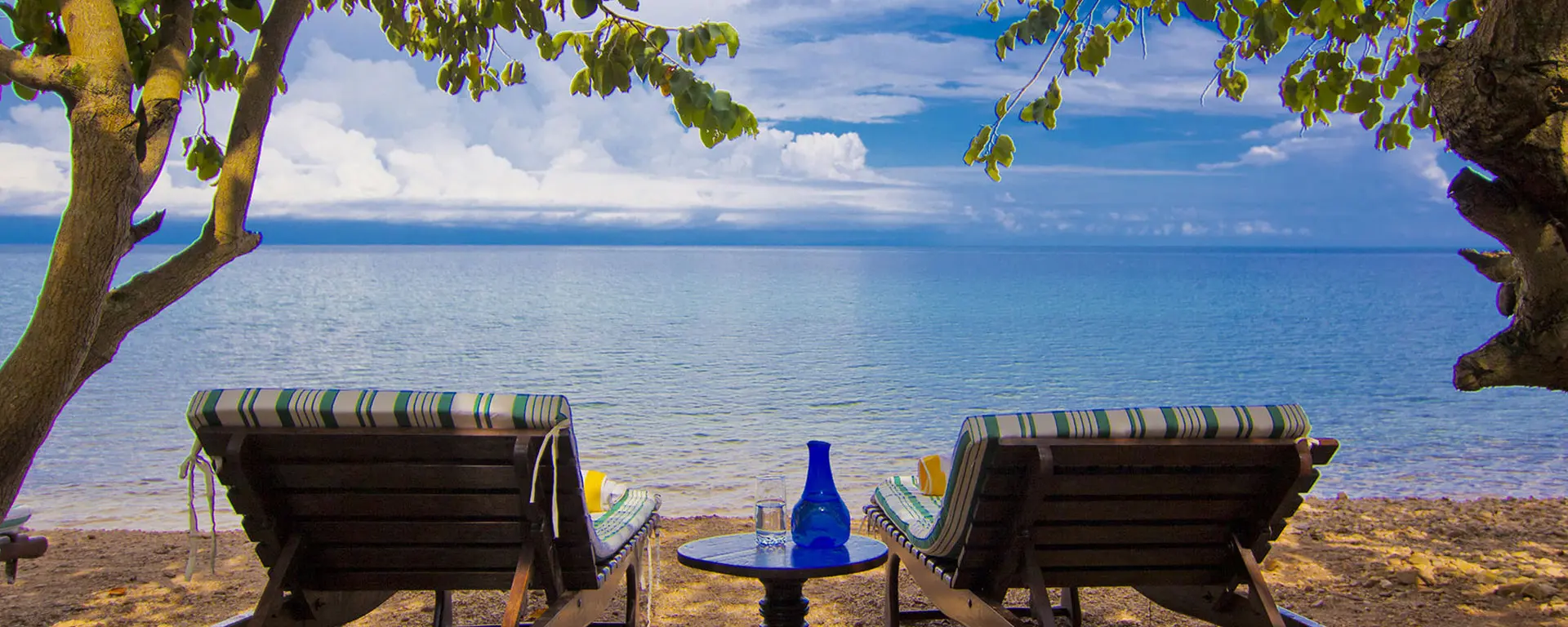
Visiting is simple and rewarding. The only way in is by boat along the lake, and chimpanzee tracking is on foot with a park guide. Walks are steep but usually short, and sightings of the habituated communities are very reliable. Afterwards, you can swim in the lake, visit waterfalls and Jane Goodall’s old feeding station, or just watch the sunset over the water towards Congo.
Accommodation is limited to a park rest house and a small number of camps, so book well ahead. Gombe is often combined with Mahale Mountains further south.
Wildlife & Biodiversity
Chimpanzees
Several chimpanzee communities live in the park, and the Kasekela community has been studied since 1960. Tracking groups are small, and time with the chimpanzees is limited to protect them.
Other primates
Olive baboons are very visible, often on the beach, and red colobus, red-tailed monkeys and blue monkeys live in the forest.
Birds and other wildlife
More than 200 bird species have been recorded, including the African fish eagle and the Peters’s twinspot. Bushbuck, bushpig and many butterflies also live here.
Best Time to Visit
Short answer: July to October, in the dry season, when trails are easier. Chimpanzees can be seen all year.
| Months | Season | What to expect |
|---|---|---|
| Jul – Oct | Dry season | Easier hiking, though chimpanzees may range higher up the valleys. |
| Nov – Jan | Short rains | Showers and a greener forest. Chimpanzees often stay lower and closer to the lake. |
| Feb – Jun | Long rains | Wet and slippery trails, but fewer visitors and good sightings. |
Lake Tanganyika is a malaria area, and the boat ride can be choppy in the afternoon.
Getting There
By air
| Airport | Best for | Notes |
|---|---|---|
| Kigoma (TKQ) | Domestic flights | Scheduled and charter flights from Dar es Salaam and Arusha. Gombe is reached by boat from Kigoma. |
By boat
Gombe has no roads. From Kigoma, take a boat north along the lake shore: about one to two hours by motorboat, or longer on the local lake taxi. Your camp or the park office can arrange the transfer.
Entrance & Fees
Tanzania National Parks charges a daily conservation fee per person. From the 2026/27 season, fees are quoted in Tanzanian shillings.
| Visitor | Adult per day |
|---|---|
| Non-resident | TZS 255,500 |
| Resident or East African citizen | TZS 10,000 |
For comparison, the 2023 to 2026 non-resident rate was US$100. Chimpanzee tracking guides and the boat transfer are separate costs.
Fees last checked October 2026 against the Tanzania National Parks tariff.