Where to stay in Etosha National Park
Showing 13–15 of 15 glamping camps and lodges in and around the park.


Etosha National Park guide
Overview
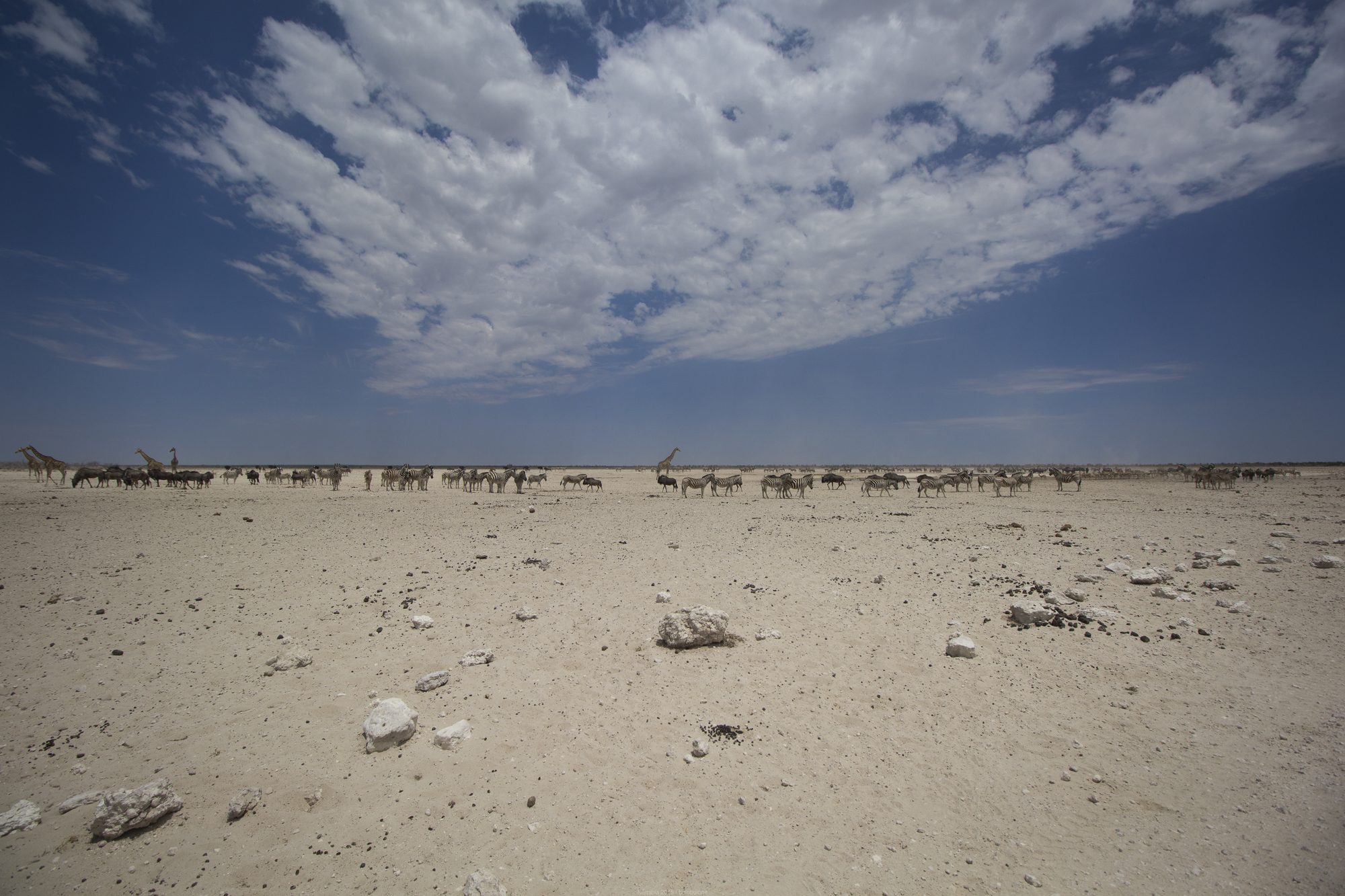
Etosha is built around a hole in the landscape. The Etosha Pan — roughly 4,800 square kilometres of flat, blinding white saltpan, large enough to be clearly visible from space — is the dry bed of a lake that vanished thousands of years ago when the rivers feeding it changed course. For most of the year it is bone dry and shimmering. After heavy rain it holds a shallow film of water, and flamingos arrive in their tens of thousands to breed.
The park around the pan covers about 22,270 square kilometres of mopane woodland, thornbush and open grassland, and it works differently from any other major park in Africa. Because there is almost no surface water in the dry season, wildlife is forced to a fixed set of waterholes, many of them spring-fed and permanent. You do not need to track animals in Etosha. You park at a waterhole and wait, and the park comes to you.
That produces a particular kind of game viewing — static, patient and extraordinarily productive. A good waterhole in September will deliver elephant, giraffe, zebra, oryx, springbok, kudu, black rhino and lion across a single afternoon, often in the same frame. The three main rest camps — Okaukuejo, Halali and Namutoni — each have a floodlit waterhole on the camp fence, and the Okaukuejo waterhole at night is one of the most reliable black rhino sightings on the continent.
Etosha’s other distinction is that it is entirely self-drivable on good gravel roads in an ordinary car, and malaria risk is low in the dry season, when most people visit. That combination — high game density, no 4×4 required, low dry-season malaria risk, camps you can book directly — makes it the most family-friendly of Africa’s great parks and by some distance the best value.
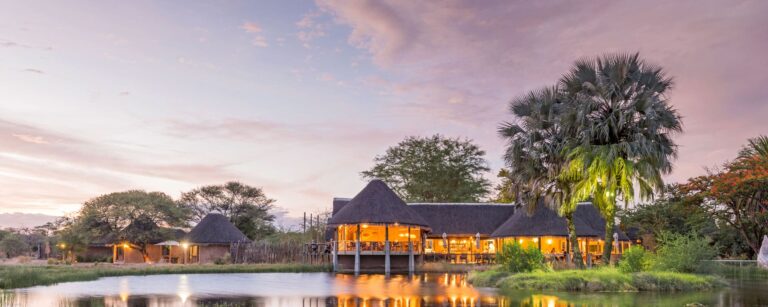
The park was proclaimed in 1907 and was for a time the largest protected area in the world before its boundaries were cut back substantially in the 1960s. Accommodation runs from the government rest camps inside the park to private lodges and tented camps on the boundaries, particularly around the Andersson and Von Lindequist gates.
Wildlife & Biodiversity
Black Rhino
Etosha holds one of the largest black rhino populations anywhere, and it is the single best place in Africa to see them. The floodlit waterhole at Okaukuejo delivers black rhino most nights in the dry season, frequently several at once, and often at very close range. Sitting there after dark is the reason many people come to Etosha at all.
Predators
Lion are common and highly visible, using the open ground around waterholes to hunt. Etosha’s lions are pale, well fed and unbothered by vehicles. Leopard are present but harder work in this terrain. Cheetah do well on the open plains, particularly in the west. Spotted and brown hyena both occur, and black-backed jackal are everywhere.
Elephant and Plains Game
Etosha’s elephant are among the largest-bodied in Africa and often appear pale grey or white from the pan dust they throw over themselves. Giraffe, blue wildebeest, Burchell’s zebra, oryx, springbok, kudu, eland and red hartebeest are all abundant. Two specials are worth knowing: the black-faced impala, a subspecies found almost nowhere else, and the Damara dik-dik, a tiny antelope common in the thicker bush around Namutoni.
Birding
Around 340 species. The great event is the flooding of the pan after good rains, when greater and lesser flamingo arrive in enormous numbers to breed, along with white pelican. Year-round the park holds kori bustard, secretary bird, ostrich and a strong range of raptors. Best birding is November to April.
Best Time to Visit
Short answer: July to October is the best time for game viewing, with September and October at the peak. November to April is the green season, which is better for birds and lower prices than for big game.
| Months | Season | What to expect |
|---|---|---|
| May to June | Early dry season | The bush is still green in early May and starts to dry. Animals begin to gather at the permanent waterholes. Nights turn cold. |
| July to August | Dry, cool | Excellent waterhole viewing in clear light. Mornings can be close to freezing. Rest camps are busy over the European and southern African school holidays. |
| September to October | Late dry season, peak | The best waterhole viewing of the year as the land dries out. October regularly tops 35°C and it is dusty, but activity at the water barely stops. |
| November to December | Early rains | Hot, humid and stormy. The first rain fills temporary pans and animals spread out. Migrant birds arrive. |
| January to April | Green season | Rain peaks between January and March. Game is dispersed and harder to find, but the park is green, birding is at its best and rates are lower. If the pan floods, flamingos arrive to breed. |
For a first visit, come between July and October and spend at least one night in each of Okaukuejo and Namutoni to cover both ends of the park. Book rest camps and boundary lodges early for July to October. Malaria risk rises during the rains, so take advice if you are travelling between November and April.
Getting There
By air
| Airport/airstrip | Best for | Notes |
|---|---|---|
| Hosea Kutako International (WDH), Windhoek | International arrivals and self-drive trips | The main gateway. Car hire desks are at the airport, and Etosha is about five hours north by road. |
| Ondangwa (OND) | The northern and eastern gates | Domestic flights from Windhoek. It is closer to King Nehale and Von Lindequist gates than Windhoek is. |
| Okaukuejo and park airstrips | Fly-in stays in the park | Charter flights only. Usually part of a fly-in safari package. |
| Private lodge airstrips (Ongava, Onguma, Mokuti and others) | Boundary lodges near Andersson and Von Lindequist gates | Charter flights arranged by the lodge or your operator. |
By road
Etosha is a driving park, and most visitors arrive in a hired vehicle as part of a wider Namibian road trip. From Windhoek to Andersson Gate is about 450km and five hours on tar. Take the B1 north through Okahandja to Otjiwarongo, then go via Outjo. For Von Lindequist Gate, stay on the B1 through Otjiwarongo and Tsumeb. That drive is five to six hours.
Roads inside the park are well-maintained gravel. A standard car manages them in the dry season, so a 4×4 is not required. Speed limits are enforced. Gates open at sunrise and close at sunset. You must be inside a rest camp or out of the park by closing time.
| Gate | Side | Nearest camp |
|---|---|---|
| Andersson | South | Okaukuejo, about 17km inside. This is the busiest gate, coming from Outjo. |
| Von Lindequist | East | Namutoni, coming from Tsumeb. |
| Galton | West | Dolomite and Olifantsrus, in the quieter western section. |
| King Nehale | North | Namutoni and the Andoni plains, coming from the Ovamboland side. |
Entrance & Fees
Etosha's fees are set by Namibia's Ministry of Environment, Forestry and Tourism. New rates took effect on 1 April 2026 under Government Notice 115 of 2026, which nearly doubled the rate for foreign adults. Each fee is charged per person per day. It is made up of equal park entrance and conservation components and is separate from accommodation.
| Visitor category (from 1 April 2026) | Age 16 and over | Over 8, under 16 |
|---|---|---|
| Foreign national (non-SADC) | N$280 | N$180 |
| SADC national | N$180 | N$100 |
| Namibian citizen | N$60 | Free |
| Children aged 8 and under | Free | Free |
| Vehicle (per day) | Fee |
|---|---|
| 10 seats or fewer | N$60 |
| 11 to 25 seats | N$150 |
| 26 to 50 seats | N$600 |
| 51 seats or more | N$1,000 |
Pay at the gate office or at the rest-camp reception at Okaukuejo or Namutoni, and keep the permit for the length of your stay. The Namibian dollar is pegged one-to-one to the South African rand, and rand is accepted. Private reserves on the boundary, such as Ongava and Onguma, charge their own fees for activities on their land.
Fees last checked October 2026 against Government Gazette 8877 (Government Notice 115 of 2026).